
Magnesium Complex: beneficios del magnesio para mujeres
Magnesium Complex: magnesio para la salud cardíaca, nerviosa y muscular de la mujer. Descubre por qué el citrato y el malato son clave.
Beneficios de Magnesium Complex para la mujer: qué es y por qué es importante
El magnesio es el cuarto catión más abundante en el cuerpo humano y un cofactor fundamental en más de 300 reacciones enzimáticas que regulan el metabolismo energético, la función neuromuscular, la salud cardiovascular, la integridad ósea, la defensa inmunitaria y el bienestar psicológico. En el caso de las mujeres, una ingesta adecuada de magnesio apoya el sistema cardiovascular, el sistema nervioso y la función musculoesquelética: áreas donde la deficiencia puede erosionar silenciosamente la vitalidad diaria.
El reto es que se estima que entre un 56 y un 68% de los estadounidenses no obtienen suficiente magnesio en su alimentación para cumplir con la ingesta diaria recomendada (IDR). Las adolescentes están entre los grupos con mayor probabilidad de tener una ingesta baja y, a medida que las mujeres envejecen, la absorción y retención de magnesio pueden disminuir, lo que hace que la suplementación sea aún más relevante. La IDR para mujeres adultas es de 310 a 320 mg/día, y aumenta a alrededor de 350 a 360 mg/día durante el embarazo y de 310 a 320 mg/día durante la lactancia.
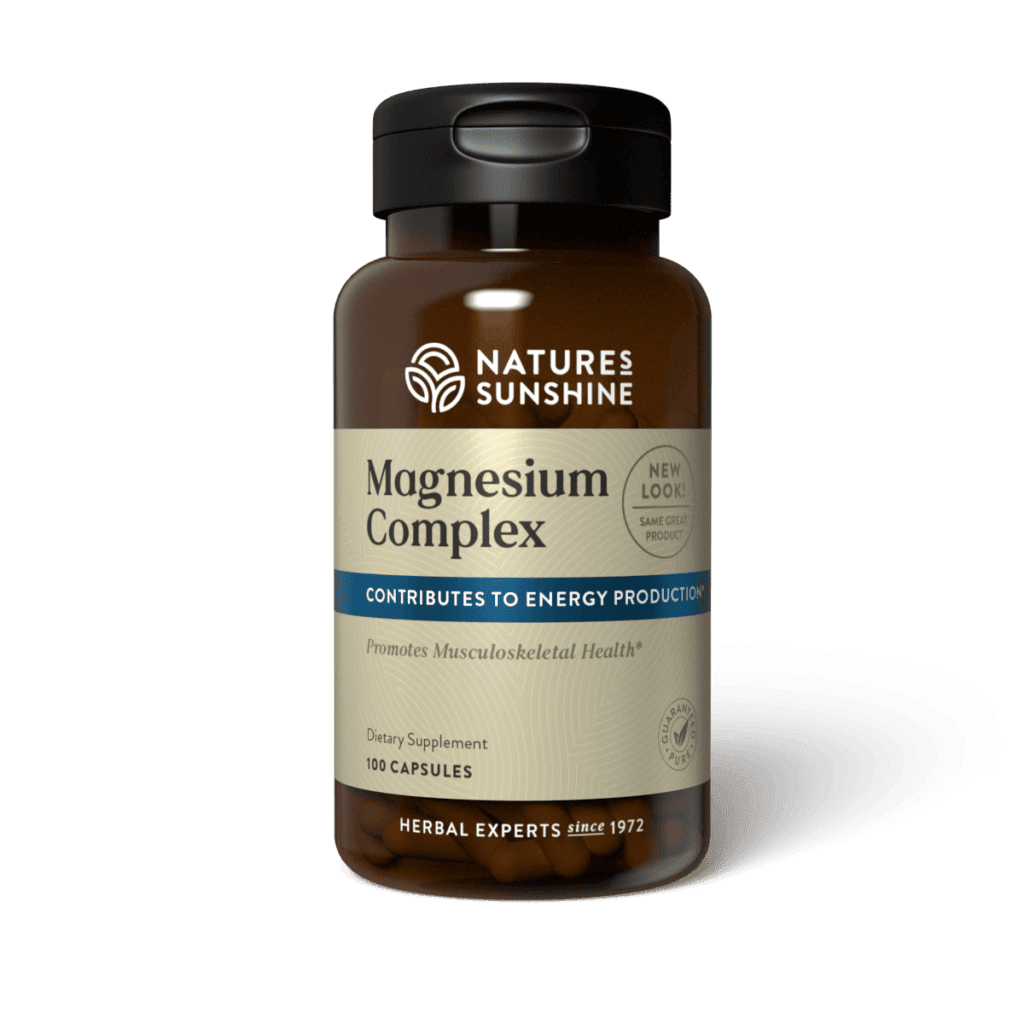
Magnesium Complex de Nature's Sunshine combina dos formas de magnesio orgánicas y muy solubles —citrato de magnesio y malato de magnesio— para apoyar una eficacia óptima. Dos cápsulas aportan 184 mg de magnesio elemental, diseñadas para ayudar al cerebro, al corazón y a los riñones con este mineral esencial. Debido a que ambas formas son sales orgánicas, ofrecen una biodisponibilidad más alta en comparación con formas inorgánicas comunes como el óxido de magnesio.
Si tienes dudas sobre si un Magnesium Complex se ajusta a tu rutina actual de suplementos, nuestro naturópata te ofrece una consulta gratuita para ayudarte a decidir.
Por qué citrato y malato: la ventaja de la biodisponibilidad
No todos los suplementos de magnesio son iguales. La forma en que se administra el magnesio afecta de manera determinante la capacidad del cuerpo para absorberlo y utilizarlo. Los suplementos de magnesio se clasifican en términos generales en compuestos orgánicos e inorgánicos. Las formas orgánicas —como el citrato de magnesio y el malato de magnesio— consisten en magnesio quelado a moléculas orgánicas como ácidos orgánicos. Estas formas son, en general, más solubles y tienen una biodisponibilidad más alta que sus equivalentes inorgánicos.
La investigación ha mostrado que el citrato de magnesio presenta una solubilidad alta incluso en agua (55%) y es considerablemente más soluble que el óxido de magnesio en todos los estados de secreción ácida. El óxido de magnesio, en comparación, resultó prácticamente insoluble en agua y solo un 43% soluble en condiciones simuladas de secreción ácida máxima. Esto es relevante porque una mayor solubilidad se traduce en una absorción más eficiente en el tracto digestivo.
Al combinar las formas de citrato y malato, Magnesium Complex ofrece dos vías de absorción complementarias. Este enfoque de doble forma es una de las razones por las que el producto se describe como muy soluble: una ventaja práctica para las mujeres que buscan aprovechar al máximo cada cápsula.
Cómo un complejo de magnesio puede apoyar la salud de la mujer
Apoyo cardíaco y cardiovascular
La investigación sugiere que los niveles más altos de magnesio en la alimentación y en la circulación se asocian de manera inversa con el riesgo de cardiopatía coronaria, accidente cerebrovascular y enfermedad cardiovascular total. Múltiples ensayos controlados aleatorizados (ECA) y metaanálisis indican que la suplementación con magnesio puede producir reducciones modestas pero significativas en la presión arterial, en particular en personas con deficiencia de magnesio o hipertensión. Una revisión sistemática de 2021 de 49 ensayos clínicos confirmó efectos antihipertensivos mediante mecanismos que incluyen la vasodilatación y el antagonismo de los canales de calcio.
En 2022, la FDA de los Estados Unidos aprobó una declaración de propiedades saludables calificada que indica que consumir una alimentación con suficiente magnesio puede reducir el riesgo de presión arterial alta, aunque la FDA concluyó que la evidencia es inconsistente y no concluyente. El magnesio también es un cofactor bien establecido en la electrofisiología cardíaca: la hipomagnesemia está fuertemente relacionada con las arritmias ventriculares y supraventriculares. Un metaanálisis de 22 estudios observó que el magnesio redujo de manera significativa tanto las arritmias ventriculares como las supraventriculares en comparación con el placebo.
Los estudios también sugieren que la suplementación con magnesio puede reducir de manera significativa la rigidez arterial. Un ECA de 24 semanas con 350 mg/día de citrato de magnesio redujo la velocidad de onda de pulso de 9.1 a 8.3 m/s frente al placebo, lo que apunta a posibles beneficios para la salud arterial.
Sistema nervioso y estado de ánimo
El magnesio es fundamental para la función del sistema nervioso, ya que actúa como antagonista fisiológico de los receptores NMDA y regulador de la excitabilidad neuronal, la transmisión neuromuscular y la señalización nerviosa. La deficiencia se asocia clínicamente con hiperexcitabilidad neuromuscular, temblores y síntomas neurológicos que van desde la migraña hasta la depresión.
La investigación sugiere que el magnesio desempeña un papel como cofactor en la síntesis de dopamina y como bloqueador de los canales del receptor de glutamato NMDA, lo que apoya el equilibrio entre neurotransmisores inhibidores y excitadores. Un ECA de 2017 mostró que 248 mg/día de magnesio redujeron de manera significativa tanto las puntuaciones de depresión (PHQ-9) como las de ansiedad (GAD-7). Sin embargo, la evidencia general sobre la ansiedad y el estado de ánimo sigue siendo preliminar: la mayoría de los ECA son pequeños y de baja calidad metodológica.
En cuanto a la prevención de la migraña, la evidencia es más sólida. Una revisión sistemática y un metaanálisis de dosis-respuesta de ECA observaron que la suplementación con magnesio redujo los ataques de migraña, su gravedad y los días de migraña al mes en comparación con los grupos de control. La National Headache Foundation sugiere de 400 a 600 mg de magnesio al día para reducir la frecuencia de la migraña, aunque recomienda hablar con un médico antes de usar dosis altas.
Función muscular y calambres
El magnesio es un cofactor esencial para la síntesis de ATP, la contracción muscular y la homeostasis de los electrolitos. La deficiencia de magnesio afecta la relajación muscular: los músculos se contraen con normalidad, pero pueden tener dificultades para relajarse por completo cuando los niveles son bajos. Una revisión sistemática de 2024 observó que la suplementación con magnesio redujo el dolor muscular, mejoró el rendimiento y la recuperación, y ejerció un efecto protector frente al daño muscular en personas físicamente activas.
En el caso específico de los calambres musculares esqueléticos, el magnesio es el suplemento mineral más estudiado. Las revisiones Cochrane de múltiples ECA observaron que es poco probable que ofrezca una prevención relevante de los calambres en adultos mayores con calambres idiopáticos (evidencia de certeza moderada), aunque la evidencia sobre los calambres en las piernas asociados al embarazo sigue siendo contradictoria. En el caso de las mujeres que hacen ejercicio, la investigación sugiere que los requerimientos de magnesio pueden aumentar entre un 10 y un 20%.
Salud ósea
El magnesio participa en la formación ósea e influye en la actividad de los osteoblastos y los osteoclastos. También afecta las concentraciones de la hormona paratiroidea y de la forma activa de la vitamina D: ambos son reguladores importantes de la homeostasis ósea. Las personas con niveles más altos de magnesio pueden tener una densidad mineral ósea más alta, lo cual es importante para ayudar a reducir el riesgo de fracturas óseas asociadas con la osteoporosis.
Un estudio de corto plazo observó que 290 mg/día de magnesio elemental (como citrato de magnesio) durante 30 días en 20 mujeres posmenopáusicas con osteoporosis suprimió el recambio óseo en comparación con el placebo, lo que sugiere una disminución de la pérdida ósea. En otros estudios se han descrito niveles bajos de magnesio sérico en mujeres con osteoporosis. Sin embargo, se necesita más investigación para determinar si los suplementos de magnesio pueden ayudar a prevenir o manejar la osteoporosis.
Marcadores de inflamación
Un metaanálisis de 2022 de 17 ECA (889 participantes) observó que la suplementación con magnesio disminuyó de manera significativa la proteína C reactiva (PCR) sérica y aumentó los niveles de óxido nítrico (NO): ambos biomarcadores relevantes para la inflamación sistémica. La relevancia clínica de estos cambios en los biomarcadores para los resultados de salud a largo plazo requiere más investigación.
Síndrome de piernas inquietas
Los niveles bajos de magnesio sérico se asocian con una mayor gravedad del síndrome de piernas inquietas (SPI), en particular en mujeres embarazadas. Un ensayo controlado aleatorizado observó que el magnesio mejoró de manera significativa tanto las puntuaciones de los síntomas del SPI como la calidad del sueño en comparación con el placebo. Una revisión sistemática de 2024 de 10 ECA confirmó que el magnesio mostró el mayor beneficio como suplemento para el SPI.
Ingredientes clave
- ✓ Envío gratis en pedidos superiores a $75
- ✓ Devoluciones fáciles en 90 días
- ✓ Envíos en pocas horas
¿Para quién es Magnesium Complex?
Los beneficios de Magnesium Complex para la mujer abarcan prácticamente todas las etapas de la vida. Esta fórmula puede ser especialmente relevante para:
- Mujeres preocupadas por la salud cardiovascular: la investigación asocia de manera consistente los niveles más altos de magnesio con un menor riesgo de enfermedad cardíaca, y las formas de citrato y malato de la fórmula están diseñadas para una absorción óptima que apoye el sistema cardiovascular.
- Mujeres activas y quienes presentan calambres o dolor muscular: el ejercicio puede aumentar los requerimientos de magnesio entre un 10 y un 20%, y el magnesio es un cofactor esencial para la síntesis de ATP y la función muscular. La deficiencia puede afectar la relajación muscular.
- Mujeres que se acercan a la menopausia o que ya están en ella: el magnesio participa en la formación ósea e influye en los niveles de la hormona paratiroidea y de la vitamina D, ambos fundamentales para la homeostasis ósea. En los estudios se han descrito niveles bajos de magnesio sérico en mujeres con osteoporosis.
- Mujeres embarazadas: los requerimientos de magnesio aumentan durante el embarazo (alrededor de 350 a 360 mg al día). Los niveles bajos de magnesio sérico se asocian con una mayor gravedad del síndrome de piernas inquietas en mujeres embarazadas. La evidencia de nivel I respalda el uso del magnesio para el síndrome premenstrual y la preeclampsia.
- Mujeres que toman ciertos medicamentos: los diuréticos de asa y las tiazidas agotan el magnesio al aumentar su excreción urinaria, y los inhibidores de la bomba de protones tomados durante periodos prolongados pueden causar hipomagnesemia. Si tomas alguno de estos medicamentos, nuestro naturópata puede ayudarte a pensar cómo el magnesio podría integrarse en tu plan de bienestar.
- Mujeres mayores: la absorción y retención de magnesio disminuyen con la edad, y los adultos mayores son más susceptibles a la deficiencia debido a una menor absorción a partir de los alimentos, un mayor uso de medicamentos y restricciones alimentarias.
Cómo tomar Magnesium Complex
Toma 2 cápsulas dos veces al día con una comida.
Cada frasco contiene 100 cápsulas. Debido a que los suplementos de magnesio pueden interactuar con ciertos medicamentos, es importante conocer las posibles interacciones. El magnesio puede disminuir la absorción de los bisfosfonatos orales (usados para la osteoporosis): sepáralos por al menos 2 horas. También puede formar complejos insolubles con los antibióticos de tetraciclina y quinolona; el antibiótico debe tomarse al menos 2 horas antes o de 4 a 6 horas después del magnesio. El magnesio también puede reducir la absorción de la gabapentina en un 20%.
Los efectos secundarios más comunes del magnesio como suplemento son problemas de tipo digestivo, como heces blandas, náuseas o calambres, que suelen aparecer con dosis más altas y son más frecuentes con las formas inorgánicas. Las formas orgánicas de citrato y malato presentes en este producto suelen tolerarse mejor. La hipermagnesemia por ingesta de suplementos es poco frecuente en personas con función renal normal.
Si estás embarazada, en periodo de lactancia, tomas medicamentos o tienes alguna condición de salud, siempre te recomendamos hablar con tu profesional de la salud. También puedes programar una consulta gratuita con nuestro naturópata para recibir orientación personalizada.
Escrito por Greg Howlett
Preguntas frecuentes
¿Cuánto magnesio necesitan las mujeres al día?
La IDR para mujeres adultas es de 310 a 320 mg/día. Durante el embarazo, los requerimientos aumentan a alrededor de 350 a 360 mg al día, y durante la lactancia, la IDR es de 310 a 320 mg. Se estima que entre un 56 y un 68% de los estadounidenses no cumplen con la IDR solo mediante la alimentación, y las adolescentes están entre los grupos con mayor probabilidad de tener una ingesta baja.
¿Por qué Magnesium Complex usa citrato y malato en lugar de óxido?
El citrato de magnesio y el malato de magnesio son formas orgánicas de magnesio que, en general, son más solubles y tienen una biodisponibilidad más alta que las formas inorgánicas. La investigación muestra que el citrato de magnesio presentó una solubilidad alta incluso en agua (55%) y fue considerablemente más soluble que el óxido de magnesio en todos los estados de secreción ácida. El óxido de magnesio resultó prácticamente insoluble en agua y solo un 43% soluble en condiciones simuladas de secreción ácida máxima. El enfoque de doble forma de Magnesium Complex está diseñado para una eficacia óptima y se describe como muy soluble.
¿Puede el magnesio ayudar con los calambres musculares durante el embarazo?
El magnesio es el suplemento mineral más estudiado para los calambres musculares esqueléticos. La evidencia sobre los calambres en las piernas asociados al embarazo sigue siendo contradictoria, aunque se sabe que la deficiencia de magnesio afecta la relajación muscular: los músculos se contraen con normalidad, pero pueden tener dificultades para relajarse por completo cuando los niveles son bajos. Los niveles bajos de magnesio sérico también se asocian con una mayor gravedad del síndrome de piernas inquietas en mujeres embarazadas. Un ensayo controlado aleatorizado observó que el magnesio mejoró de manera significativa tanto las puntuaciones de los síntomas del SPI como la calidad del sueño en comparación con el placebo. Las mujeres embarazadas deben consultar con su profesional de la salud antes de comenzar a tomar cualquier suplemento.
¿Interactúa el magnesio con los medicamentos?
Sí, varios medicamentos pueden interactuar con el magnesio. Los diuréticos de asa y las tiazidas agotan el magnesio al aumentar su excreción urinaria. Los inhibidores de la bomba de protones (IBP) tomados durante periodos prolongados pueden causar hipomagnesemia. El magnesio puede disminuir la absorción de los bisfosfonatos (sepáralos por al menos 2 horas) y puede formar complejos insolubles con los antibióticos de tetraciclina y quinolona (toma el antibiótico al menos 2 horas antes o de 4 a 6 horas después del magnesio). También puede reducir la absorción de la gabapentina en un 20%. Si tomas algún medicamento, habla con tu profesional de la salud o comunícate con nuestro naturópata para una consulta gratuita.
¿Cuáles son los signos de la deficiencia de magnesio?
Los primeros signos y síntomas de la deficiencia de magnesio incluyen pérdida de apetito, náuseas, vómitos, fatiga y debilidad. A medida que la deficiencia se agrava, pueden presentarse entumecimiento, hormigueo, contracciones musculares y calambres, convulsiones, cambios de personalidad, ritmos cardíacos anormales y espasmos coronarios. La deficiencia grave de magnesio puede alterar la homeostasis mineral y causar niveles bajos de calcio o potasio en sangre. Los grupos con mayor riesgo incluyen a los adultos mayores, las personas con trastornos gastrointestinales, quienes tienen diabetes tipo 2, las personas con dependencia del alcohol y quienes toman ciertos medicamentos a largo plazo.
¿Puede el magnesio apoyar la salud ósea en mujeres posmenopáusicas?
El magnesio participa en la formación ósea e influye en la actividad de los osteoblastos y los osteoclastos, así como en las concentraciones de la hormona paratiroidea y de la vitamina D activa: ambos son reguladores importantes de la homeostasis ósea. Las personas con niveles más altos de magnesio pueden tener una densidad mineral ósea más alta. Un estudio de corto plazo observó que 290 mg/día de magnesio elemental (como citrato de magnesio) durante 30 días en 20 mujeres posmenopáusicas con osteoporosis suprimió el recambio óseo en comparación con el placebo. En otros estudios se han descrito niveles bajos de magnesio sérico en mujeres con osteoporosis. Sin embargo, se necesita más investigación para determinar si los suplementos de magnesio pueden ayudar a prevenir o manejar la osteoporosis.
Talk to Dr. Shannyn Fowl
Not sure if this is right for you? Book a free, no-pressure consultation for personalized guidance on your health goals.
Book your free consult →About Caring Sunshine
A family-run reseller of premium supplements — free shipping, a 90-day guarantee, and real people who know the products.
Learn more about us →