
Is Vitamin D3 the Same as Vitamin D? A Complete Guide
Learn whether Vitamin D3 is the same as vitamin D, how they differ, why it matters for your health, and what the research says about D3 supplementation.
Is Vitamin D3 the Same as Vitamin D?
If you've ever stood in the supplement aisle wondering whether Vitamin D3 is the same as vitamin D, you're not alone. It's one of the most common questions our naturopath fields during free consultations, and the answer is both simple and surprisingly nuanced.
Vitamin D is a group of fat-soluble seco-steroids known collectively as calciferol. Within that family, there are two primary forms: vitamin D2 (ergocalciferol), derived from plants and commonly used in food fortification, and Vitamin D3 (cholecalciferol), synthesized in human skin from 7-dehydrocholesterol and obtained from animal-origin dietary sources. So Vitamin D3 is a form of vitamin D — but it's not the only form, and the distinction matters.
Both D2 and D3 function as prohormones, meaning they are biologically inert until the body converts them through a two-step hydroxylation process. The two forms differ chemically only in their side-chain structures, and these differences do not affect their metabolic activation pathway. However, research suggests that Vitamin D3 could be more than three times as effective as vitamin D2 in raising serum 25(OH)D concentrations and maintaining those levels for a longer time, and its metabolites have superior affinity for vitamin D-binding proteins in plasma.
From Sunlight to Active Hormone: How Vitamin D3 Is Made and Metabolized
Your body can actually manufacture its own Vitamin D3. When UVB radiation with a wavelength of approximately 290 to 320 nanometers penetrates uncovered skin, it converts cutaneous 7-dehydrocholesterol to previtamin D3, which undergoes a thermally induced rearrangement to become Vitamin D3. That's why vitamin D is often called the "sunshine vitamin."
However, season, time of day, cloud cover, smog, skin melanin content, and sunscreen all affect UV radiation exposure and vitamin D synthesis. Clouds, smog, old age, and having dark-colored skin reduce the amount of vitamin D your skin makes. During cloudy months or winter, supplementation may be necessary to maintain adequate levels.
Once Vitamin D3 enters the body — whether from sun exposure, food, or a supplement — it must be activated through two hydroxylation steps. The first occurs in the liver, where the enzyme 25-hydroxylase converts vitamin D into 25-hydroxyvitamin D, or 25(OH)D, the major circulating form and the one clinically measured to assess your vitamin D status. The second hydroxylation takes place in the kidneys, where 1-alpha-hydroxylase converts 25(OH)D into calcitriol (1,25-dihydroxyvitamin D), the physiologically active form.
Calcitriol exerts its effects through vitamin D receptor (VDR)-mediated genomic and non-genomic pathways. VDRs are found in virtually every organ system, which explains why Vitamin D3 is associated with such a broad range of health functions — from bones and muscles to the immune system and cardiovascular system.
Why Food Sources Alone Often Fall Short
Few foods naturally contain vitamin D. Fatty fish (trout, salmon, tuna, mackerel) and fish liver oils are among the best dietary sources, while beef liver, egg yolks, and cheese have small amounts. Although dietary sources contribute to vitamin D intake, they are typically insufficient to maintain optimal serum 25(OH)D concentrations in most individuals. According to data from the National Health and Nutrition Examination Survey, most people in the United States consume less than the recommended amounts of vitamin D.
Bone, Immune, and Cardiovascular Support: What the Research Says
Bone Health and the Skeletal System
Vitamin D3 plays a crucial role in improving Calcium absorption, modulating bone remodeling, and supporting muscle function. It helps regulate normal blood levels of Calcium and phosphorus, assists in strengthening bones, and — along with other vitamins, minerals, and hormones — encourages bone mineralization. The evidence for Vitamin D3 in the treatment and prevention of nutritional rickets and osteomalacia is historically strong and well established.
For osteoporosis prevention, research suggests that combined supplementation with vitamin D and Calcium may be most beneficial for older adults in institutional settings and those with confirmed deficiency. Clinical studies have shown that vitamin D supplementation, particularly when combined with resistance training or weight-bearing exercise, may help improve bone mineral density and reduce fall risk.
Immune Health
Vitamin D3 has several established roles in immunomodulation. Research suggests it induces the expression of antimicrobial peptides, including cathelicidin and β-defensins, with broad-spectrum activity against bacteria, viruses, and fungi. These peptides are important for the clearance of infections and maintaining the integrity of the skin, respiratory tract, and gut mucosa.
Upon conversion to calcitriol, Vitamin D3 directs adaptive immunity by adjusting T and B cell function. It favors the differentiation of regulatory T cells (Tregs) that are critical for maintaining immune tolerance. A 2017 meta-analysis of data from 25 randomised controlled trials revealed a protective effect of vitamin D supplementation for the prevention of acute respiratory infections, with the greatest benefit seen in individuals who were severely deficient.
Cardiovascular System
Observational studies and meta-analyses have consistently reported associations between low serum 25(OH)D concentrations and an increased risk of cardiovascular diseases and cardiovascular-related mortality. Proposed mechanisms include downregulation of the renin-angiotensin-aldosterone system, improved endothelial function, and reduced inflammation. However, it's important to note that large-scale randomized controlled trials — most notably the VITAL trial — have not demonstrated that Vitamin D3 supplementation reduces major cardiovascular events in generally healthy populations. The overall evidence base is robust in epidemiological and mechanistic terms but remains inconclusive for supplementation-based cardiovascular benefit.
Autoimmune Conditions
Research has examined the immunomodulatory mechanisms of Vitamin D3 across conditions including psoriasis, systemic lupus erythematosus, rheumatoid arthritis, type 1 diabetes, and inflammatory bowel disease. The VITAL study found that vitamin D supplementation with or without omega-3 fatty acids reduced autoimmune disease by 22%, though this was a secondary outcome analysis and requires confirmation in prospectively designed trials.
Mortality
Numerous observational studies have shown higher all-cause mortality associated with vitamin D deficiency. Below 30 nmol/L, mortality was increased more than twofold, with a nadir in the curves found at a 25(OH)D level of around 75 nmol/L. Vitamin D3 — but not vitamin D2 nor vitamin D active metabolites supplementation — was associated with lower mortality. However, these mortality data are from observational and meta-analytic sources, and causal claims require further RCT confirmation.
Key ingredients
- ✓ Envío gratis en pedidos superiores a $75
- ✓ Devoluciones fáciles en 90 días
- ✓ Envíos en pocas horas
Who May Benefit from Vitamin D3 Supplementation
Because so many factors can limit your body's ability to produce Vitamin D3 naturally, a wide range of people may benefit from supplementation. High-risk populations include individuals with limited sun exposure, older adults, and people with malabsorption disorders — all of whom require attention to ensure optimal vitamin D status.
People with darker skin tones produce less cutaneous vitamin D in response to solar radiation. The VITAL trial specifically included more than 5,000 Black participants, for whom the question of vitamin D effectiveness is particularly relevant.
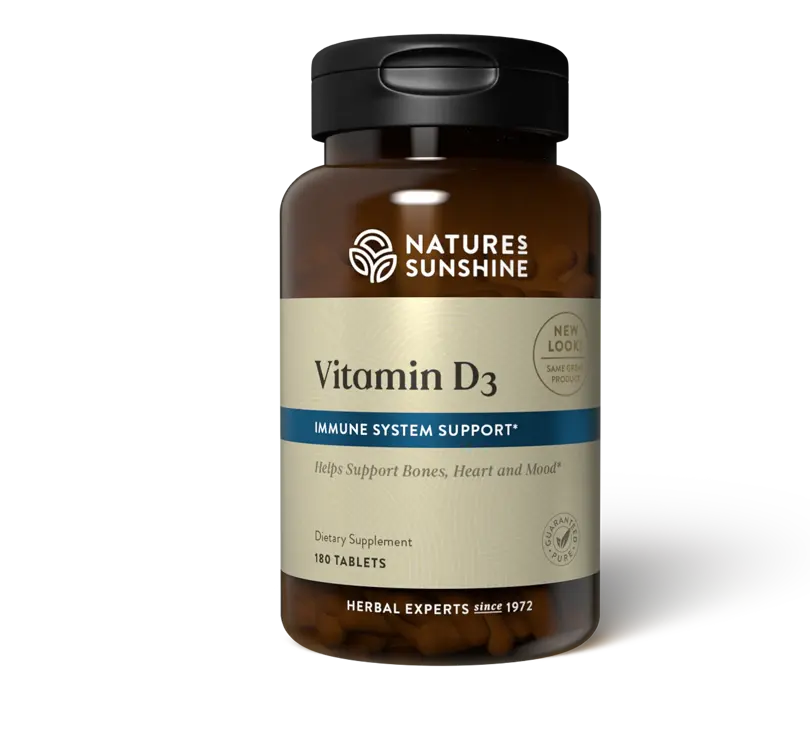
Anyone living in northern latitudes, working indoors most of the day, or going through the cloudy winter months may find it difficult to obtain adequate sun exposure. Nature's Sunshine Vitamin D3 was designed with these realities in mind, offering the benefits of the "sunshine" vitamin in a convenient tablet form.
If you're unsure whether Vitamin D3 supplementation is right for you, our naturopath is available for a free consultation to help you think through your individual needs.
Directions for Use
Take 2 tablets daily with a meal. Each serving of 2 tablets provides 100 mcg of Vitamin D3 (cholecalciferol). Taking Vitamin D3 with a meal that contains some fat may enhance absorption, as vitamin D is fat-soluble. The concurrent presence of fat in the gut enhances vitamin D absorption, though some vitamin D is absorbed even without dietary fat.
This product is non-GMO and comes in a bottle of 180 tablets — a convenient 90-day supply at the recommended serving size.
Escrito por Greg Howlett
Preguntas frecuentes
Is Vitamin D3 the same as vitamin D?
Vitamin D3 (cholecalciferol) is one of two primary forms of vitamin D. The other is vitamin D2 (ergocalciferol), derived from plants. Both are prohormones that must be activated through the same metabolic pathway. However, research suggests Vitamin D3 could be more than three times as effective as vitamin D2 in raising and sustaining serum 25(OH)D concentrations, and its metabolites have superior affinity for vitamin D-binding proteins in plasma.
Why is Vitamin D3 considered the preferred supplemental form?
Vitamin D3 is the form naturally synthesized in human skin and obtained from animal-origin dietary sources. Studies suggest it is more potent than vitamin D2 at raising serum 25(OH)D levels and maintaining those levels over time. It is endorsed by major health organizations and osteoporosis guidelines as the preferred supplemental form for bone health and overall vitamin D status.
How do I know if I'm getting enough vitamin D?
Serum concentration of 25(OH)D is the main indicator of vitamin D status. Values below 20 ng/mL are generally considered deficient, and levels between 20 and 30 ng/mL suggest insufficiency. According to the National Health and Nutrition Examination Survey, most people in the United States consume less than the recommended amounts of vitamin D. A healthcare provider can assess your levels through a simple blood test.
Can I get enough vitamin D from sunlight alone?
While your body can produce Vitamin D3 from UVB exposure, many factors limit this process — including season, time of day, cloud cover, smog, skin melanin content, sunscreen use, and aging. You cannot get too much vitamin D from sunshine because your skin limits the amount it makes, but you may not produce enough to maintain optimal levels, especially during winter months or if you spend most of your time indoors.
Can Vitamin D3 interact with medications?
Yes. Corticosteroids may impair how the body handles vitamin D. The weight-loss drug orlistat and the cholesterol-lowering drug cholestyramine can reduce absorption of vitamin D and other fat-soluble vitamins. Phenobarbital and phenytoin increase the breakdown of vitamin D. Those taking thiazide diuretics or cardiac glycosides such as digitalis should exercise caution and consult a healthcare provider, as vitamin D may affect Calcium levels in the context of these medications.
Is it possible to take too much Vitamin D3?
Very high blood levels of vitamin D (greater than 375 nmol/L or 150 ng/mL) can cause adverse effects including nausea, muscle weakness, confusion, and in severe cases kidney stones or kidney failure. High levels are almost always caused by excessive supplemental intake, not sun exposure. The Institute of Medicine recommends an upper intake limit of 4,000 IU/day (100 mcg/day) for adults 9 years and older to mitigate the risk of toxicity.
Talk to Dr. Shannyn Fowl
Not sure if this is right for you? Book a free, no-pressure consultation for personalized guidance on your health goals.
Book your free consult →About Caring Sunshine
A family-run reseller of premium supplements — free shipping, a 90-day guarantee, and real people who know the products.
Learn more about us →