
¿Es la curcumina lo mismo que la cúrcuma? Diferencias clave
¿Es la curcumina igual a la cúrcuma? Conoce sus diferencias, cómo actúan juntas y qué dice la investigación.
¿Es la curcumina lo mismo que la cúrcuma?
Es una de las preguntas más comunes en el mundo de los suplementos: ¿es la curcumina lo mismo que la cúrcuma? La respuesta corta es no, pero están estrechamente relacionadas. La cúrcuma es el rizoma (tallo subterráneo) seco completo de la planta Curcuma longa, que pertenece a la familia del jengibre y es originaria del sur de Asia tropical. La curcumina, por su parte, es un compuesto específico dentro de la cúrcuma: el principal polifenol responsable de su color amarillo anaranjado intenso y el foco de la mayoría de las investigaciones científicas.
El rizoma de la cúrcuma contiene una mezcla compleja de más de 235 fitoquímicos identificados, entre ellos aceites volátiles (turmeronas, zingibereno), azúcares, proteínas y resinas. Entre estos componentes se encuentra una familia de pigmentos fenólicos llamados curcuminoides, y la curcumina (también conocida como diferuloilmetano o "Curcumina I") es el miembro predominante y suele representar entre un 75 y un 80% del total de curcuminoides en un extracto crudo de cúrcuma.
La cúrcuma en polvo cruda normalmente contiene solo alrededor de un 2 y un 5% de curcuminoides en peso. Por eso, si dependes de la cúrcuma de tu especiero, obtienes relativamente poca curcumina por porción. Los extractos estandarizados que se usan en los suplementos concentran el contenido de curcuminoides —a menudo hasta entre un 95 y un 98%— para aportar cantidades apreciables de estos compuestos bioactivos.
Comprender esta distinción es importante porque la gran mayoría de la investigación clínica se ha centrado específicamente en la curcumina y los curcuminoides, y no en la cúrcuma en polvo completa. Un suplemento bien formulado cierra esta brecha al aportar tanto la raíz de cúrcuma de espectro completo como niveles más altos de extracto concentrado de curcuminoides.
Por qué importa la curcumina: vías antiinflamatorias y antioxidantes
La curcumina se ha investigado extensamente por su capacidad de modular múltiples vías de señalización implicadas en las respuestas inflamatorias. La investigación muestra que ejerce efectos antiinflamatorios principalmente al inhibir la activación de la vía de señalización de NF-κB —un regulador maestro de la inflamación— además de modular las vías de MAPK, JAK/STAT y el inflamasoma NLRP3. Actúa reduciendo la producción de citocinas inflamatorias como TNF-α, IL-1β e IL-6, y suprime las enzimas COX-2 y LOX responsables de producir prostaglandinas y leucotrienos.
En cuanto al efecto antioxidante, múltiples ensayos controlados aleatorizados (ECA) en humanos y metaanálisis han mostrado que la suplementación con curcumina puede aumentar la capacidad antioxidante total (CAT), la superóxido dismutasa (SOD), la catalasa y el glutatión, además de reducir el malondialdehído (MDA), un marcador de peroxidación lipídica. El mecanismo molecular principal implica la activación de la vía transcripcional Keap1-Nrf2/ARE, que aumenta la expresión de las propias enzimas citoprotectoras endógenas del cuerpo.
Sin embargo, hay una advertencia importante. La curcumina tiene una biodisponibilidad oral inherentemente baja debido a su baja solubilidad en agua, su escasa permeabilidad intestinal, su inestabilidad a pH alcalino y su rápido metabolismo. Los estudios muestran que las concentraciones necesarias para lograr efectos biológicos en entornos de laboratorio pueden ser difíciles de alcanzar solo mediante la dosificación oral. Por eso la formulación es tan importante, y por eso el extracto de pimienta negra (piperina) desempeña un papel de apoyo fundamental, como se explica más adelante.
Qué dice la investigación: articulaciones, inflamación y más
Salud articular y osteoartritis
La osteoartritis de rodilla es la indicación más investigada para la cúrcuma y la curcumina en ensayos clínicos en humanos. Una revisión sistemática y metaanálisis en red de 2025 que incluyó 17 estudios observó que todas las preparaciones de cúrcuma redujeron de forma significativa las puntuaciones de dolor WOMAC en comparación con el placebo, y las preparaciones con biodisponibilidad mejorada lograron una reducción del dolor de un 30%, que alcanzó el umbral de diferencia mínima clínicamente importante. Una revisión sistemática y metaanálisis de 2022 de 29 ECA con 2,396 participantes en cinco tipos de artritis —incluidas la osteoartritis, la artritis reumatoide y la gota— observó beneficios significativos para el dolor y la inflamación. Por separado, un metaanálisis confirmó que el extracto de curcumina/cúrcuma tuvo una eficacia de tratamiento similar a la de los antiinflamatorios no esteroideos (AINE), con base en 16 ECA y 1,810 adultos. Sin embargo, la calidad de la evidencia en estas revisiones se calificó de manera consistente como baja a muy baja debido al tamaño reducido de las muestras, el alto riesgo de sesgo y la heterogeneidad en la formulación.
Inflamación crónica y marcadores metabólicos
Una revisión sistemática y metaanálisis de ECA de 2025 observó que la suplementación con Curcuma longa redujo de forma significativa la glucosa en ayunas, la HbA1c, los triglicéridos y el colesterol LDL, mientras elevaba el colesterol HDL y la capacidad antioxidante total en personas con síndrome metabólico y diabetes tipo 2. También redujo marcadores inflamatorios sistémicos como la proteína C reactiva, el TNF-α y la IL-6. La heterogeneidad fue de moderada a alta, lo que refleja diferencias en la formulación y la dosis.
Apoyo gastrointestinal
La investigación sugiere que la curcumina puede apoyar la salud gastrointestinal. Un metaanálisis de 2025 de 13 ECA controlados con placebo observó que la curcumina presentó una eficacia significativa para lograr la remisión clínica y la respuesta en pacientes con colitis ulcerosa cuando se usó como terapia adyuvante. La evidencia para la enfermedad de Crohn sigue siendo más limitada.
Salud cognitiva
La evidencia preclínica sobre los efectos neuroprotectores de la curcumina es extensa y abarca mecanismos que favorecen la restauración del BDNF, la reducción de la neuroinflamación y la actividad antioxidante. Los datos preliminares en humanos sugieren posibles beneficios en el envejecimiento cognitivo: un estudio observó que 1,500 mg/día de una formulación de curcumina a base de aceite de cúrcuma durante 12 meses estabilizó la función cognitiva en adultos mayores en comparación con el placebo. Sin embargo, la evidencia clínica sigue en una etapa temprana, ya que la mayoría de los ensayos en humanos son pequeños y de corta duración.
Ingredientes clave
- ✓ Envío gratis en pedidos superiores a $75
- ✓ Devoluciones fáciles en 90 días
- ✓ Envíos en pocas horas
Quién puede beneficiarse de un suplemento Turmeric Curcumin
Turmeric Curcumin de Nature's Sunshine está formulado para adultos que buscan apoyo natural en varias áreas clave. Según la investigación, este producto puede ser especialmente útil para:
- Personas que buscan comodidad articular: los estudios sugieren que los curcuminoides pueden apoyar la función articular, aliviar la rigidez ocasional y favorecer la flexibilidad, en especial para quienes se preocupan por los cambios articulares relacionados con la edad.
- Quienes desean apoyar una respuesta inflamatoria saludable: la investigación indica que la curcumina puede ayudar a modular vías inflamatorias clave, lo que la hace relevante para cualquier persona que quiera apoyar el equilibrio natural de su cuerpo.
- Adultos interesados en la defensa antioxidante: la evidencia clínica sugiere que la curcumina puede ayudar al cuerpo a combatir el estrés oxidativo al apoyar las enzimas antioxidantes endógenas.
- Personas que buscan apoyo integral para el bienestar: una porción de este producto equivale a 32,000 mg de raíz de cúrcuma entera, y aporta tanto la raíz de cúrcuma de espectro completo como extracto concentrado de curcuminoides para apoyar la salud articular, de la piel, el cerebro, el intestino y el sistema inmunitario.
Si tienes dudas sobre si un suplemento Turmeric Curcumin es adecuado para tus necesidades individuales, nuestro naturópata te ofrece una consulta gratuita para ayudarte a explorar tus opciones.
Cómo tomar Turmeric Curcumin
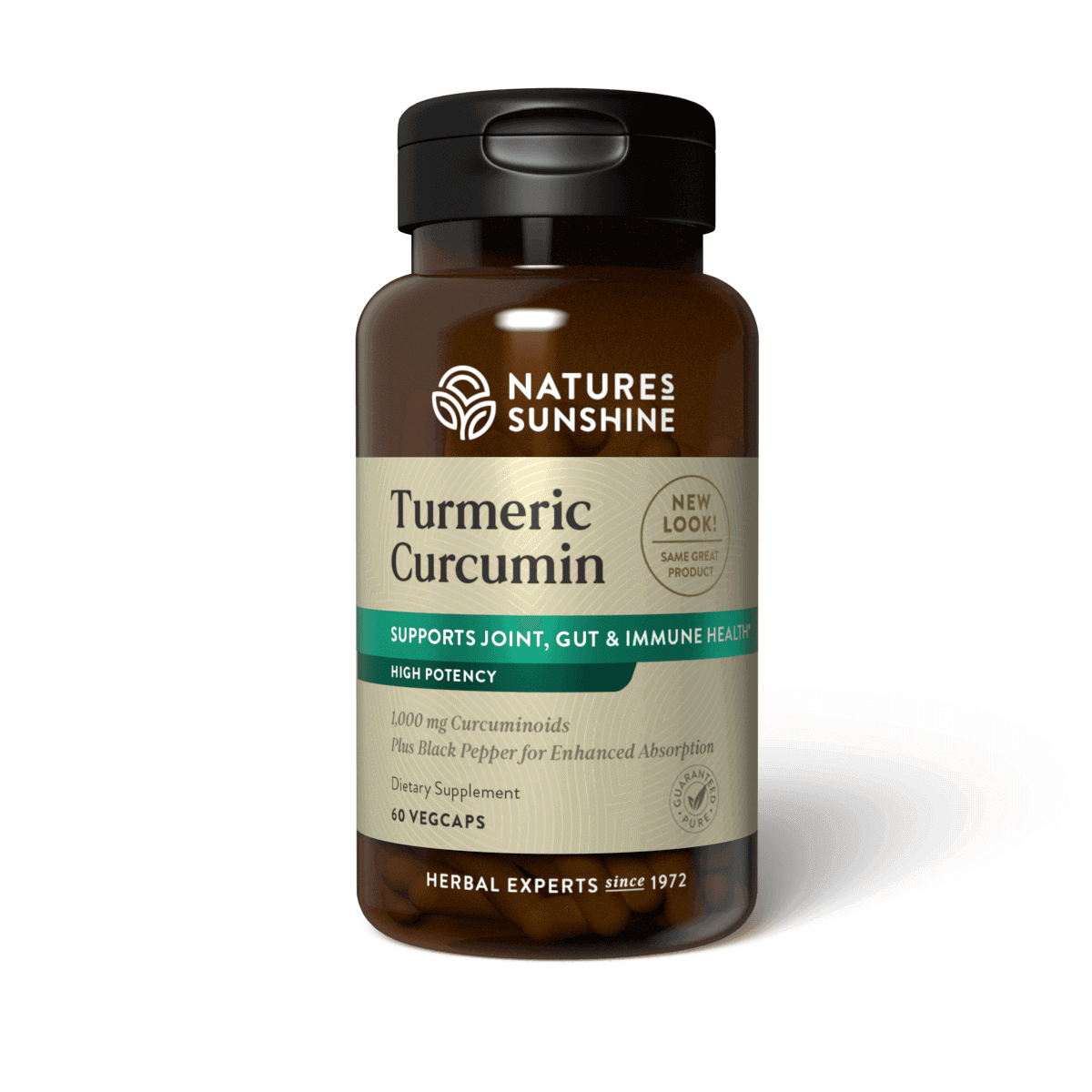
Toma 2 cápsulas vegetales al día. Cada porción aporta 1,100 mg de extracto de cúrcuma con 1,000 mg de curcuminoides, potenciado con extracto de pimienta negra para apoyar la absorción. Este producto no contiene OGM y viene en un frasco de 60 cápsulas, lo que proporciona un suministro para 30 días a la porción recomendada.
Cabe señalar que la biodisponibilidad oral inherentemente baja de la curcumina es un desafío bien documentado. La inclusión de extracto de pimienta negra en esta fórmula aborda esto directamente: la investigación muestra que la piperina de la pimienta negra puede aumentar la absorción de curcumina hasta en un 2,000% en humanos. Si tomas algún medicamento, especialmente anticoagulantes o fármacos metabolizados por las enzimas CYP3A4, es recomendable hablar con un profesional de la salud antes de empezar, ya que la piperina puede afectar la forma en que se metabolizan ciertos medicamentos.
Escrito por Greg Howlett
Preguntas frecuentes
¿Es la curcumina lo mismo que la cúrcuma?
No. La cúrcuma es el rizoma seco completo de la planta Curcuma longa, que contiene más de 235 fitoquímicos identificados, entre ellos aceites volátiles, proteínas y resinas. La curcumina es un polifenol específico dentro de la cúrcuma: el curcuminoide principal y el compuesto responsable del color amarillo de la cúrcuma. La cúrcuma en polvo cruda contiene solo alrededor de un 2 y un 5% de curcuminoides en peso, por lo que se usan extractos estandarizados en los suplementos para aportar cantidades apreciables.
¿Por qué se incluye pimienta negra con Turmeric Curcumin?
La curcumina tiene una biodisponibilidad oral inherentemente baja debido a su baja solubilidad en agua, su rápido metabolismo y su rápida eliminación sistémica. La piperina, el alcaloide activo de la pimienta negra, inhibe las enzimas (en particular la UDP-glucuronosiltransferasa) que marcan la curcumina para su excreción rápida. En un estudio en humanos, la administración conjunta de piperina con curcumina aumentó las concentraciones sanguíneas de curcumina en un 2,000%. El extracto de pimienta negra también puede ofrecer sus propias propiedades antioxidantes y puede ayudar con las molestias digestivas ocasionales.
¿Qué apoyan la cúrcuma y la curcumina?
La investigación sugiere que la cúrcuma y la curcumina pueden apoyar una respuesta inflamatoria saludable, la comodidad y la función articular, la defensa antioxidante y el bienestar general, incluida la salud de la piel, el cerebro, el intestino y el sistema inmunitario. Múltiples revisiones sistemáticas y metaanálisis de ensayos controlados aleatorizados han mostrado beneficios para el dolor y la rigidez articular, los biomarcadores inflamatorios y los marcadores de estrés oxidativo, aunque la calidad de la evidencia generalmente se califica de baja a moderada.
¿Cuánta curcumina contiene este producto?
Cada porción de dos cápsulas aporta 1,100 mg de extracto de cúrcuma que contiene 1,000 mg de curcuminoides. Según el fabricante, una porción equivale a 32,000 mg de raíz de cúrcuma entera. La fórmula está potenciada con extracto de pimienta negra para mejorar la biodisponibilidad y la absorción.
¿Hay consideraciones de seguridad con los suplementos de cúrcuma y curcumina?
Se ha descrito que la curcumina es segura en dosis de hasta 6 gramos al día durante 4 a 7 semanas, según datos de ensayos clínicos, y la FDA considera que la curcumina está generalmente reconocida como segura (GRAS). Sin embargo, las molestias gastrointestinales, como las náuseas o el malestar estomacal, son los efectos secundarios que se describen con mayor frecuencia, en particular con dosis más altas. La evidencia disponible indica un riesgo poco frecuente de daño hepático por productos de cúrcuma o curcumina en dosis medicinales, y este riesgo podría ser mayor en productos con biodisponibilidad mejorada. Debido a que la piperina puede inhibir el CYP3A4 y la glicoproteína P, puede afectar el metabolismo de ciertos medicamentos. Cualquier persona que tome medicamentos con receta debe consultar a un profesional de la salud antes de usarlo.
¿Este producto no contiene OGM?
Sí. Turmeric Curcumin de Nature's Sunshine no contiene OGM. Viene en cápsulas vegetales, con una porción de 2 cápsulas al día.
Talk to Dr. Shannyn Fowl
Not sure if this is right for you? Book a free, no-pressure consultation for personalized guidance on your health goals.
Book your free consult →About Caring Sunshine
A family-run reseller of premium supplements — free shipping, a 90-day guarantee, and real people who know the products.
Learn more about us →