
¿Funciona la clorofila líquida? Guía basada en evidencia
¿Funciona la clorofila líquida? Descubre la ciencia detrás de la clorofilina de cobre y sodio, sus usos tradicionales y qué dice la investigación.
¿Funciona la clorofila líquida? Lo que debes saber
La clorofila es el pigmento verde que permite a las plantas convertir la luz solar en energía mediante la fotosíntesis. También ha formado parte de la alimentación humana a lo largo de la historia como un componente natural de verduras de hoja verde como la espinaca, la col rizada y la lechuga. Pero cuando las personas preguntan "¿funciona Liquid Chlorophyll?", por lo general se refieren a la forma en suplemento, y es importante entender exactamente de qué se trata.
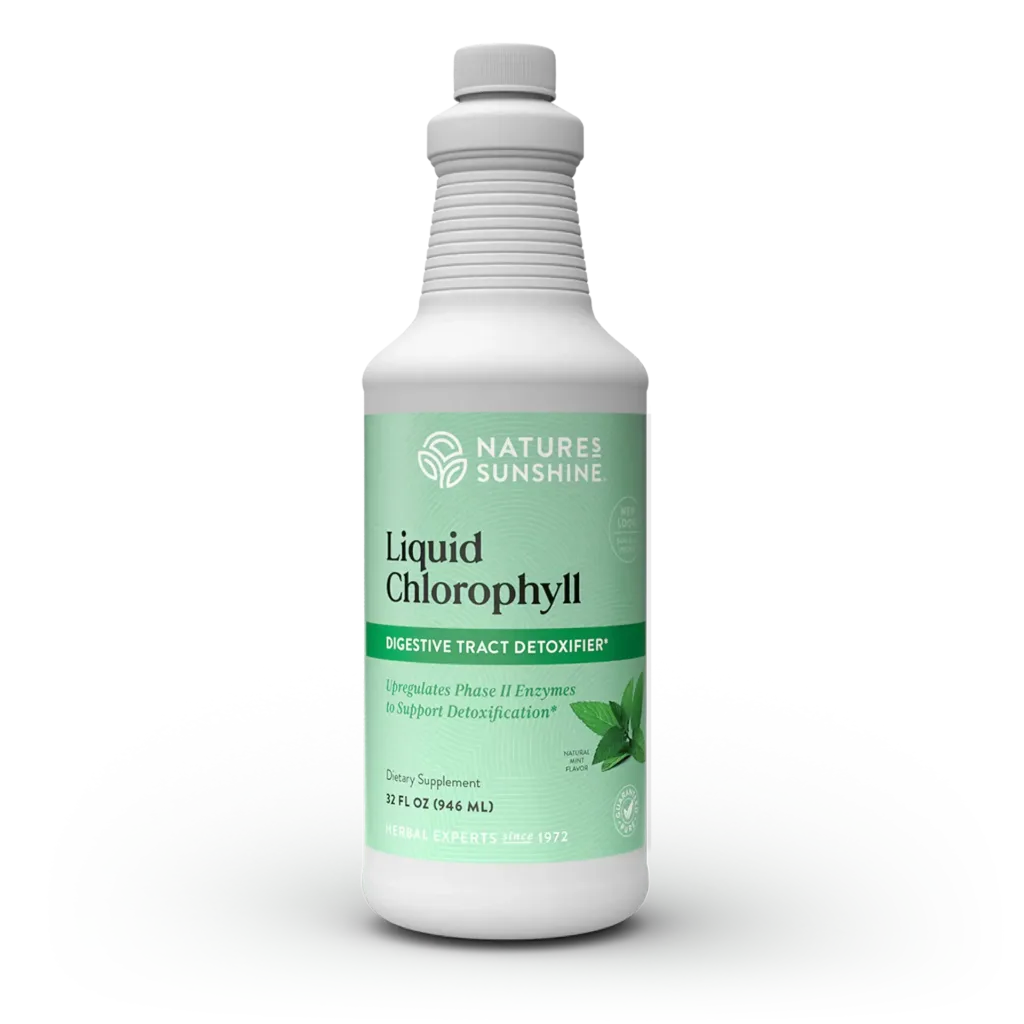
La mayoría de los suplementos de clorofila líquida, incluido Liquid Chlorophyll de Nature's Sunshine, contienen clorofilina de cobre y sodio (SCC), un derivado semisintético y soluble en agua de la clorofila natural. En esta forma, el átomo central de magnesio que se encuentra en la clorofila de las plantas se sustituye por cobre, y se elimina la cola de fitol soluble en grasa. Esto hace que el compuesto se disuelva completamente en agua, algo que la clorofila natural no puede hacer.
Esta fórmula está diseñada para apoyar los procesos naturales de depuración de la sangre, favorecer una respuesta inmunitaria adecuada, fortalecer el cuerpo a nivel celular y molecular, y actuar como un desodorante natural. La clorofilina se ha utilizado en contextos tradicionales y clínicos durante más de 50 años, y aunque algunas áreas de investigación son más sólidas que otras, existe un cuerpo de evidencia significativo que vale la pena explorar.
Qué dice la investigación sobre la clorofila líquida
Al evaluar si la clorofila líquida funciona, resulta útil analizar la evidencia área por área en lugar de hacer afirmaciones generales. Esto es lo que realmente muestra la investigación:
Unión a carcinógenos y apoyo frente a toxinas ambientales
Esta es el área mejor estudiada del uso de la clorofilina en humanos. La investigación sugiere que la clorofilina puede formar complejos moleculares estrechos con ciertas sustancias químicas que se sabe o se sospecha que causan cáncer —incluidos la aflatoxina B1, los hidrocarburos poliaromáticos del humo de tabaco y las aminas heterocíclicas de la carne cocida—. Un ensayo histórico, aleatorizado, doble ciego y controlado con placebo en 180 adultos de Qidong, China, observó que 100 mg de clorofilina tres veces al día durante cuatro meses produjeron una reducción de un 55% en los biomarcadores urinarios de aductos de aflatoxina-ADN en comparación con el placebo. Un estudio farmacocinético cruzado posterior confirmó que tanto la clorofilina como la clorofila pueden reducir la biodisponibilidad de la aflatoxina.
Apoyo tradicional para la depuración de la sangre y la desintoxicación
La clorofila se ha utilizado como depurador y desintoxicante interno tradicional durante décadas. Su similitud estructural con la hemoglobina —ambas son estructuras de anillo tetrapirrólico— ha llevado históricamente a los terapeutas a asociar las preparaciones ricas en clorofila con la salud de la sangre. La clorofilina de hierro y sodio (una forma distinta de la clorofilina de cobre presente en este producto) se ha estudiado en ensayos clínicos para la anemia por deficiencia de hierro, pero la clorofila estándar a base de plantas que contiene magnesio (o cobre, como en el SCC) carece de evidencia clínica humana sólida para aumentar directamente la hemoglobina o el recuento de glóbulos rojos.
Efectos desodorantes
La clorofila se ha comercializado como "desodorante interno" desde la década de 1950. Un estudio de 1980 observó que la administración de clorofilina ayudaba a controlar los olores corporales y fecales en 62 pacientes geriátricos de una residencia de adultos mayores. Otro estudio en pacientes con trimetilaminuria observó que el SCC oral disminuyó significativamente la trimetilamina urinaria. Sin embargo, hay poca evidencia moderna de este beneficio en personas sanas.
Apoyo inmunitario
A la clorofilina se le han atribuido tradicionalmente propiedades de apoyo inmunitario, y la evidencia preclínica sugiere posibles efectos inmunoestimulantes, incluido el aumento de la producción de glóbulos blancos y la modulación antiinflamatoria. Sin embargo, actualmente no existe evidencia clínica humana directa de resultados inmunitarios específicos, como la resistencia a infecciones o el recuento de células inmunitarias.
Una nota honesta sobre la biodisponibilidad
Se sabe poco sobre la biodisponibilidad y el metabolismo de la clorofila en humanos. Los estudios en animales sugieren que solo se absorbe alrededor de un 1–3% de la clorofila, mientras que las estimaciones en humanos sugieren una biodisponibilidad de aproximadamente un 5%. Los perfiles farmacocinéticos de muchos derivados de la clorofila siguen estando poco caracterizados, lo que complica la optimización de la dosis. Esta es un área que requiere más investigación.
Ingredientes clave
- ✓ Envío gratis en pedidos superiores a $75
- ✓ Devoluciones fáciles en 90 días
- ✓ Envíos en pocas horas
Quién podría beneficiarse de la clorofila líquida
La clorofila líquida puede resultar atractiva para quienes buscan un depurador interno tradicional y un suplemento verde diario para agregar a su agua. Según su formulación y la evidencia disponible, puede ser especialmente relevante para:
- Quienes buscan apoyo en la depuración de todo el cuerpo: la clorofila se ha utilizado tradicionalmente como desintoxicante interno, y los datos de quimioprevención de aflatoxina ofrecen una base científica para una actividad específica de unión a toxinas en el tracto gastrointestinal.
- Quienes buscan apoyo para la salud de la sangre: la relación estructural de la clorofila con la hemoglobina ha llevado históricamente a su uso en preparados tradicionales de apoyo a la sangre, aunque esta aplicación tiene más raíces en la práctica tradicional que en evidencia clínica controlada para la clorofila estándar a base de plantas.
- Quienes desean un estímulo para el sistema inmunitario: aunque la evidencia clínica humana directa aún está en desarrollo, la clorofilina se ha posicionado tradicionalmente como un tónico inmunitario, y la investigación preclínica sugiere posibles efectos inmunoestimulantes y antiinflamatorios.
- Cualquier persona que busque un desodorante interno natural: la clorofilina se ha usado por vía oral como desodorante interno durante más de 50 años, con cierta evidencia clínica antigua que respalda su uso en poblaciones específicas.
Si tienes dudas sobre si la clorofila líquida es adecuada para tus objetivos de bienestar, nuestro naturópata te ofrece una consulta gratuita para ayudarte a evaluar las opciones.
Cómo tomar la clorofila líquida
Toma 2 cucharadas (30 mL) al día en un vaso de agua fría de 8 oz líq. Refrigera después de abrir.
Cada porción de 30 mL proporciona 90 mg de clorofilina de cobre y sodio. El formato líquido facilita mezclarlo con el agua que tomas a diario: a muchas personas les gusta su sabor suave y ligeramente mentolado. El frasco de 32 oz ofrece un suministro generoso para el uso diario.
No se conoce toxicidad de las clorofilas naturales, y no se han descrito efectos tóxicos atribuibles a la clorofilina a pesar de más de 50 años de uso clínico en humanos. Cuando se toma por vía oral, la clorofilina puede causar una coloración verdosa en la orina o las heces, o una coloración amarilla o negra en la lengua: estos son efectos cosméticos inofensivos. Se han descrito casos ocasionales de diarrea leve. Dado que la seguridad de los suplementos de clorofila no se ha evaluado en mujeres embarazadas o en periodo de lactancia, deben evitarse durante el embarazo y la lactancia. Las personas con enfermedad de Wilson u otros trastornos poco frecuentes del metabolismo del cobre deben consultar a un profesional de la salud antes de usarlo, debido a su contenido de cobre.
Escrito por Greg Howlett
Preguntas frecuentes
¿Funciona la clorofila líquida, o es solo una moda?
Existe un cuerpo de evidencia genuino detrás de la clorofilina: no es solo una moda de las redes sociales. La evidencia clínica humana más sólida proviene de la investigación sobre quimioprevención de la aflatoxina, donde la suplementación con clorofilina produjo una reducción de un 55% en los biomarcadores de aductos de aflatoxina-ADN en un ensayo aleatorizado y controlado con placebo. Su uso como desodorante interno y en la curación de heridas se remonta a más de 50 años. Sin embargo, algunas afirmaciones populares —como que la suplementación oral elimina el acné o que aumenta drásticamente la energía— carecen de evidencia clínica sólida. La respuesta a si la clorofila líquida funciona depende de lo que esperas que haga. Nuestro naturópata puede ayudarte a establecer expectativas realistas durante una consulta gratuita.
¿Es la clorofila líquida lo mismo que la clorofila de las plantas?
No exactamente. La mayoría de los suplementos de clorofila líquida, incluido este, contienen clorofilina de cobre y sodio: un derivado semisintético y soluble en agua de la clorofila natural. En esta forma, el átomo central de magnesio se sustituye por cobre y se elimina la cola de fitol soluble en grasa, para que se disuelva en agua. La clorofila natural de las plantas es soluble en grasa y no se disuelve bien en agua, por eso se desarrolló la forma modificada para los suplementos líquidos.
¿Puede la clorofila líquida ayudar con el olor corporal?
La clorofilina se ha utilizado como desodorante interno desde la década de 1950. Un estudio de 1980 observó que ayudaba a controlar los olores corporales y fecales en 62 pacientes geriátricos de una residencia de adultos mayores, y un pequeño estudio en pacientes con trimetilaminuria mostró disminuciones significativas en la trimetilamina urinaria después de tres semanas de SCC oral. Sin embargo, hay poca evidencia moderna de efectos desodorantes en personas sanas. El beneficio parece ser más relevante para poblaciones específicas.
¿La clorofila líquida tiene efectos secundarios?
La clorofilina se ha utilizado durante más de 50 años sin que se hayan descrito efectos secundarios graves. Los efectos más comunes son cosméticos: coloración verdosa de la orina o las heces y, en ocasiones, coloración amarilla o negra de la lengua. Algunas personas presentan diarrea leve. La clorofilina también puede causar resultados falsos positivos en las pruebas de guayaco para detectar sangre oculta. Quienes estén embarazadas, en periodo de lactancia o tengan enfermedad de Wilson deben evitar su uso o consultar primero a un profesional de la salud.
¿Cuánta clorofila absorbe realmente el cuerpo?
La biodisponibilidad de los derivados de la clorofila es relativamente baja. Los estudios en animales sugieren que solo se absorbe alrededor de un 1–3%, mientras que las estimaciones en humanos la sitúan en aproximadamente un 5%. Según la ingesta diaria estimada y la biodisponibilidad, la absorción de clorofila podría alcanzar entre 1.3 y 4.3 mg al día a partir de fuentes dietéticas. Los perfiles farmacocinéticos de muchos derivados de la clorofila siguen estando poco caracterizados, lo cual los investigadores reconocen como un área que necesita más investigación.
¿La clorofila líquida apoya el sistema inmunitario?
La clorofilina se ha posicionado tradicionalmente como un tónico inmunitario, y la investigación preclínica sugiere posibles efectos inmunoestimulantes, incluido el aumento de la producción de glóbulos blancos y la modulación antiinflamatoria. Sin embargo, aún no se dispone de evidencia clínica humana directa sobre resultados inmunitarios específicos —como la resistencia a infecciones o cambios medibles en el recuento de células inmunitarias—. Lo mejor es entender la afirmación sobre el apoyo inmunitario como algo arraigado en el uso tradicional y en los hallazgos preclínicos, y no como algo demostrado en ensayos humanos.
Talk to Dr. Shannyn Fowl
Not sure if this is right for you? Book a free, no-pressure consultation for personalized guidance on your health goals.
Book your free consult →About Caring Sunshine
A family-run reseller of premium supplements — free shipping, a 90-day guarantee, and real people who know the products.
Learn more about us →