
Suplemento de magnesio complejo | Citrato y malato
Magnesio complejo con citrato y malato: apoya la salud cardiovascular, el sistema nervioso y los músculos. Formas muy solubles y bien absorbidas.
¿Qué es un suplemento de magnesio complejo y por qué es importante?
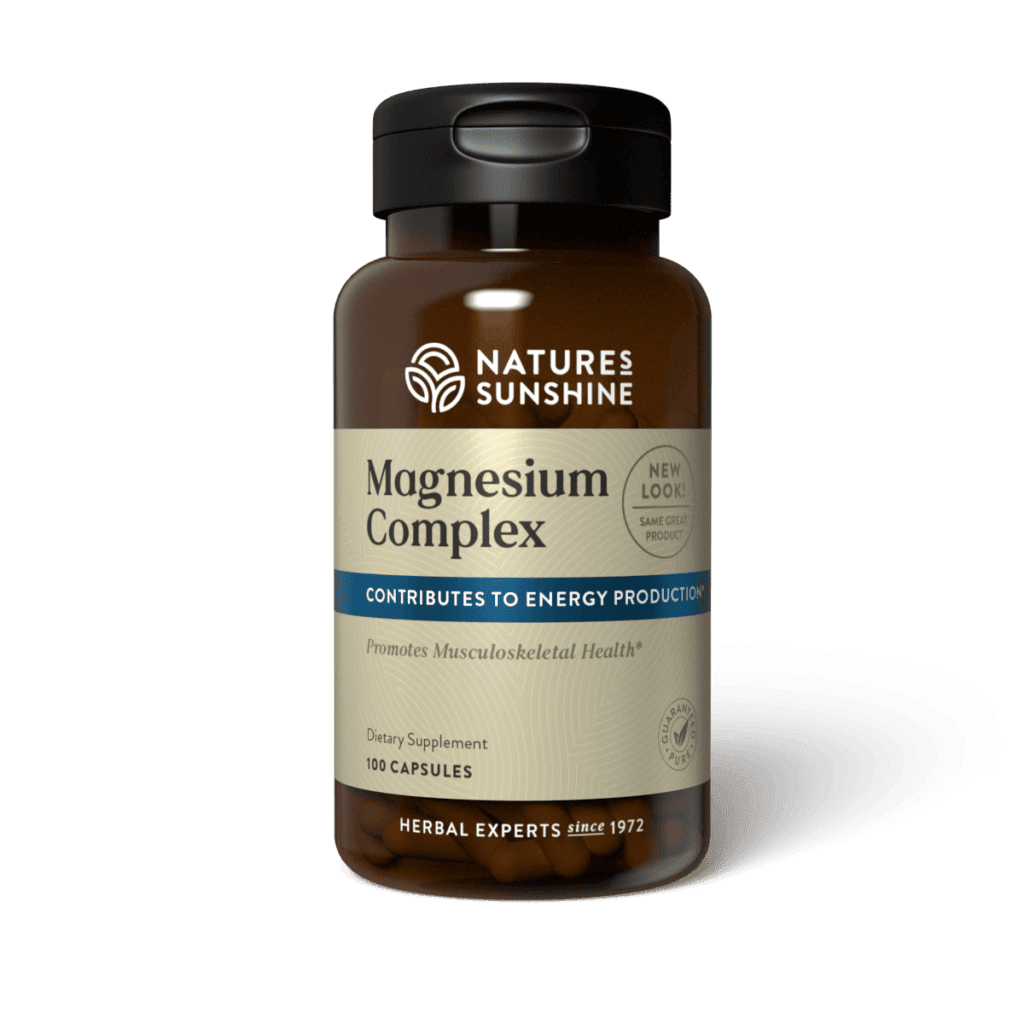
Un suplemento de magnesio complejo combina dos o más formas de magnesio en una sola fórmula, lo que te brinda los beneficios del perfil único de absorción y solubilidad de cada forma. Magnesium Complex de Nature's Sunshine combina citrato de magnesio y malato de magnesio —ambas formas orgánicas conocidas por su alta solubilidad y biodisponibilidad— para apoyar el cerebro, el corazón y los riñones con este mineral esencial.
El magnesio es el cuarto catión más abundante en el cuerpo humano y actúa como cofactor en más de 300 sistemas enzimáticos que regulan el metabolismo energético, la función neuromuscular, la salud cardiovascular, la integridad ósea y más. A pesar de estas funciones fundamentales, se calcula que entre un 56% y un 68% de los estadounidenses no obtienen suficiente magnesio a través de la alimentación para cumplir con la ingesta diaria recomendada (IDR).
Debido a que las formas orgánicas como el citrato y el malato suelen ser más solubles y presentan una mayor biodisponibilidad que las formas inorgánicas como el óxido de magnesio, un suplemento de magnesio complejo elaborado con estas sales orgánicas puede ofrecer una absorción más eficiente. La investigación confirma que el citrato de magnesio presenta una alta solubilidad incluso en agua (55%) y es considerablemente más soluble que el óxido de magnesio en todos los estados de secreción ácida.
Dos formas muy solubles que trabajan juntas
Magnesium Complex aporta 184 mg de magnesio por porción de dos cápsulas, gracias a dos formas orgánicas complementarias. Las sales orgánicas de magnesio —en las que el mineral está quelado a moléculas orgánicas como el ácido cítrico o el ácido málico— suelen ser más solubles y absorberse mejor que las sales inorgánicas. Esto es importante porque el magnesio que tu cuerpo realmente absorbe es el magnesio que puede ejercer su función.
Una vez absorbido, el ion Mg²⁺ cumple una amplia variedad de funciones biológicas. Es indispensable para la síntesis de ATP, la moneda energética fundamental de cada célula. Actúa como cofactor esencial de la bomba Na,K-ATPasa, que mantiene el equilibrio iónico celular. Además, modula la excitabilidad neuronal mediante el antagonismo de los canales de calcio dependientes de voltaje y el bloqueo de los receptores NMDA: mecanismos directamente relacionados con la señalización nerviosa y la relajación muscular.
Un metaanálisis de 2022 de 17 ensayos controlados aleatorizados (ECA) observó que la suplementación con magnesio disminuyó significativamente los niveles séricos de proteína C-reactiva (PCR) y aumentó los niveles de óxido nítrico (NO), lo que sugiere beneficios sistémicos para el equilibrio inflamatorio y la función vascular.
Ingredientes clave
- ✓ Envío gratis en pedidos superiores a $75
- ✓ Devoluciones fáciles en 90 días
- ✓ Envíos en pocas horas
¿Quién debería considerar un suplemento de magnesio complejo?
Dado que se calcula que entre un 56% y un 68% de los estadounidenses no alcanzan la IDR de magnesio, un suplemento de magnesio complejo puede ser una opción que vale la pena considerar para una amplia variedad de adultos. Ciertos grupos tienen más probabilidades de presentar niveles insuficientes de magnesio, entre ellos los adultos mayores (debido a una menor absorción a partir de los alimentos y a un mayor uso de medicamentos), las personas con trastornos gastrointestinales, quienes tienen diabetes tipo 2, y las personas que toman medicamentos a largo plazo, como diuréticos o inhibidores de la bomba de protones, que pueden agotar las reservas de magnesio.
Las personas que buscan apoyar su sistema cardiovascular pueden encontrar esta fórmula especialmente útil. La investigación sugiere que los niveles más altos de magnesio se asocian de forma inversa con el riesgo de enfermedad coronaria, accidente cerebrovascular y enfermedad cardiovascular total. El magnesio también es un cofactor bien establecido en la electrofisiología cardíaca.
Quienes experimentan calambres o tensión muscular ocasionales también pueden beneficiarse. La deficiencia de magnesio dificulta la relajación muscular: los músculos pueden contraerse con normalidad, pero tienen dificultades para liberarse por completo cuando los niveles son bajos. Las personas físicamente activas pueden tener necesidades mayores, ya que el ejercicio puede aumentar los requerimientos de magnesio en un 10–20%.
Si estás lidiando con molestias del sistema nervioso —desde el estrés cotidiano hasta el bienestar nervioso— el magnesio actúa como un antagonista natural de los receptores NMDA y modula la transmisión sináptica y la excitabilidad neuronal. Si tienes dudas sobre si un suplemento de magnesio complejo es adecuado para tu situación, nuestro naturópata te ofrece una consulta gratuita para ayudarte a evaluar tus necesidades individuales.
Cómo tomar Magnesium Complex
Toma 2 cápsulas dos veces al día con una comida. Cada frasco contiene 100 cápsulas. Dos cápsulas aportan 184 mg de magnesio procedente del citrato de magnesio y el malato de magnesio.
Como referencia, la IDR de magnesio es de 400–420 mg/día para hombres adultos y de 310–320 mg/día para mujeres adultas. Dado que esta fórmula utiliza formas orgánicas muy solubles, está diseñada para lograr una absorción eficiente cuando se toma con alimentos.
Consideraciones importantes: el magnesio puede interactuar con ciertos medicamentos. Si tomas bisfosfonatos, separa tu dosis de magnesio por al menos 2 horas. Los antibióticos del tipo tetraciclinas y quinolonas deben tomarse al menos 2 horas antes o 4–6 horas después del magnesio, ya que el magnesio puede formar complejos insolubles que reducen la absorción del antibiótico. El magnesio también puede reducir la absorción de la gabapentina en alrededor de un 20%. Si tomas alguno de estos medicamentos o tienes dudas sobre posibles interacciones, te recomendamos comunicarte con nuestro naturópata para una consulta gratuita.
Escrito por Greg Howlett
Preguntas frecuentes
¿Qué diferencia a un suplemento de magnesio complejo de uno de magnesio de una sola forma?
Un suplemento de magnesio complejo combina dos o más formas de magnesio: en este caso, citrato de magnesio y malato de magnesio. Ambas son formas orgánicas que suelen ser más solubles y presentar una mayor biodisponibilidad que las formas inorgánicas como el óxido de magnesio. El citrato de magnesio, por ejemplo, tiene una solubilidad del 55% en agua, mientras que el óxido de magnesio es prácticamente insoluble en agua. El uso de dos formas orgánicas complementarias puede favorecer una absorción eficiente y bien tolerada.
¿Cuánto magnesio aporta Magnesium Complex por porción?
Dos cápsulas de Magnesium Complex contienen 184 mg de magnesio procedente del citrato de magnesio y el malato de magnesio. El uso recomendado es de 2 cápsulas dos veces al día con una comida, lo que equivale a dos porciones al día.
¿Cómo apoya el magnesio la salud cardíaca?
La investigación sugiere que los niveles más altos de magnesio en la dieta y en la circulación se asocian de forma inversa con el riesgo de enfermedad coronaria, accidente cerebrovascular y enfermedad cardiovascular total. El magnesio regula la excitación cardíaca, el tono vascular y la función endotelial. Múltiples ECA y metaanálisis muestran que puede producir reducciones modestas pero significativas de la presión arterial, en particular en personas con deficiencia de magnesio o hipertensión. El magnesio también es un cofactor bien establecido en la electrofisiología cardíaca, y la hipomagnesemia está fuertemente relacionada con las arritmias.
¿Puede el magnesio ayudar con los calambres musculares?
El magnesio es el suplemento mineral más estudiado para los calambres musculares esqueléticos. La deficiencia de magnesio dificulta la relajación muscular: los músculos se contraen con normalidad, pero pueden tener dificultades para liberarse por completo cuando los niveles son bajos. Sin embargo, revisiones Cochrane de múltiples ECA observaron que es poco probable que el magnesio brinde una profilaxis significativa de los calambres en adultos mayores con calambres idiopáticos (evidencia de certeza moderada), mientras que la evidencia sobre los calambres en las piernas asociados al embarazo sigue siendo contradictoria. Mantener niveles adecuados de magnesio apoya la función muscular saludable en general.
¿Los suplementos de magnesio tienen efectos secundarios?
Los suplementos de magnesio pueden causar náuseas, calambres y diarrea, en particular a dosis más altas. Los efectos secundarios son más frecuentes con las formas inorgánicas, como el óxido de magnesio. Las formas orgánicas de esta fórmula —citrato y malato— suelen tolerarse mejor. El exceso de magnesio suplementario es poco frecuente en personas con función renal normal, ya que los riñones lo excretan de manera eficiente. Si tienes función renal deficiente, consulta a un profesional de la salud antes de tomar el suplemento.
¿Quién tiene más riesgo de presentar una deficiencia de magnesio?
Ciertos grupos tienen más probabilidades de presentar niveles insuficientes de magnesio: los adultos mayores (debido a una menor absorción y a un mayor uso de medicamentos), las personas con trastornos gastrointestinales, quienes tienen diabetes tipo 2, las personas con dependencia del alcohol, y quienes toman medicamentos a largo plazo, como diuréticos de asa o tiazídicos, o inhibidores de la bomba de protones. Se calcula que entre un 56% y un 68% de los estadounidenses no obtienen suficiente magnesio a diario para cumplir con la IDR.
Talk to Dr. Shannyn Fowl
Not sure if this is right for you? Book a free, no-pressure consultation for personalized guidance on your health goals.
Book your free consult →About Caring Sunshine
A family-run reseller of premium supplements — free shipping, a 90-day guarantee, and real people who know the products.
Learn more about us →