
Colágeno | Apoyo para piel, cabello y uñas
Descubre cómo el colágeno apoya la elasticidad de la piel, el crecimiento del cabello y la fortaleza de las uñas, y cómo usarlo a diario.
Colágeno: la proteína estructural más abundante del cuerpo
El colágeno es, por sí solo, la proteína más abundante del cuerpo humano, pues representa aproximadamente un tercio del total de proteínas. Esta proteína fibrosa forma la base estructural de la matriz extracelular y da soporte a tejidos como la piel, el cabello, las uñas, los huesos, el cartílago, los tendones y los ligamentos. Su nombre proviene del griego kolla, que significa «pegamento»: una descripción acertada para la proteína que, literalmente, nos mantiene unidos.
La estructura única de triple hélice del colágeno es rica en los aminoácidos glicina (33%), prolina e hidroxiprolina (22%). Estos aminoácidos le dan al colágeno su característica arquitectura fibrosa y aportan a los tejidos su rigidez y resistencia al estiramiento. De los 28 subtipos conocidos de colágeno, los tipos I, II y III conforman el 80–90% del colágeno en el cuerpo humano, y el tipo I es el más abundante en la piel (aproximadamente un 80%).
A medida que envejecemos, el contenido de colágeno de la piel disminuye de forma natural. Esta disminución se caracteriza por niveles reducidos de colágeno, fibras de elastina y ácido hialurónico, lo que provoca una pérdida de elasticidad e hidratación de la piel. La suplementación con proteína de colágeno ofrece una forma de proporcionar al cuerpo los bloques de aminoácidos específicos que necesita para apoyar estos tejidos estructurales.
Cómo se absorben y utilizan los péptidos de colágeno en el cuerpo
El colágeno nativo es un polímero grande y complejo, con baja solubilidad y biodisponibilidad. Para que sea útil como suplemento, el colágeno debe descomponerse primero en segmentos más pequeños mediante un proceso llamado hidrólisis. El resultado —el colágeno hidrolizado o los péptidos de colágeno— consiste en cadenas de aminoácidos pequeñas y de bajo peso molecular (3–6 kDa) que el cuerpo puede absorber con facilidad.
La investigación ha mostrado que, cuando el hidrolizado de colágeno se toma por vía oral, se absorbe en forma de di- y tripéptidos (dos o tres aminoácidos) que suelen ser ricos en hidroxiprolina. Se cree que estos péptidos más pequeños entran en la circulación y llegan a tejidos diana como la piel o el cartílago, donde ayudan a apoyar a las células productoras de colágeno llamadas fibroblastos.
Una revisión sistemática que analizó 10 ensayos clínicos aleatorizados concluyó que el consumo de colágeno tanto intacto como hidrolizado puede apoyar la salud de la piel, ya sea aumentando la síntesis de componentes de la matriz extracelular o mediante la interacción con células inmunitarias reguladoras que ayudan a mantener la respuesta de la piel al colágeno endógeno. Datos emergentes también sugieren que los péptidos de colágeno pueden funcionar de forma más eficaz cuando se combinan con vitamina C, la cual actúa como cofactor esencial en la hidroxilación de los residuos de lisina y prolina durante la síntesis de colágeno.
La tradición alimentaria de consumir alimentos ricos en colágeno antecede a la ciencia moderna por milenios. Desde la medicina tradicional china hasta los remedios populares europeos, los caldos de huesos y preparados ricos en colágeno elaborados a partir de tejidos conectivos animales se valoraban por su apoyo a la piel, las articulaciones y la vitalidad general. Los polvos modernos de péptidos de colágeno simplemente ofrecen el mismo perfil distintivo de aminoácidos en un formato conveniente: se disuelven fácilmente en bebidas en lugar de requerir horas de cocción a fuego lento.
Qué sugieren los estudios sobre los beneficios del colágeno
Elasticidad e hidratación de la piel: Múltiples ensayos controlados aleatorizados (ECA) y metaanálisis respaldan el papel del colágeno en la salud de la piel. Una revisión sistemática y un metaanálisis que utilizó datos de 10 ECA con 646 participantes observó que los suplementos de colágeno eran estadísticamente eficaces para aumentar la hidratación y la elasticidad de la piel. La investigación sugiere que los fibroblastos reconocen péptidos bioactivos como Pro-Hyp y Gly-Pro-Hyp, y pueden aumentar la síntesis de colágeno y ácido hialurónico en respuesta.
Apoyo para el cabello y las uñas: Los péptidos de colágeno aportan sustratos de aminoácidos —en particular, prolina, glicina e hidroxiprolina— que apoyan la síntesis de queratina y la integridad de la matriz dérmica alrededor de los folículos pilosos. Una revisión sistemática observó que los péptidos de colágeno pueden mejorar el aspecto clínico, la fuerza y la fragilidad del cabello. En cuanto a las uñas, un ensayo de 2017 publicado en el Journal of Cosmetic Dermatology observó que los péptidos bioactivos de colágeno tomados durante 24 semanas aumentaron la velocidad de crecimiento de las uñas en un 12% y redujeron la frecuencia de uñas quebradizas en un 42% en mujeres con síndrome de uñas frágiles.
Apoyo para las articulaciones y los huesos: La investigación sugiere que la suplementación con péptidos de colágeno, especialmente junto con el ejercicio, puede apoyar la comodidad articular y la salud del tejido conectivo. Una revisión sistemática y un metaanálisis aporta evidencia de una reducción significativa del dolor en pacientes con osteoartritis de rodilla que recibieron péptidos de colágeno en comparación con placebo. La investigación preliminar en mujeres posmenopáusicas también sugiere que el colágeno puede apoyar la densidad ósea, aunque se necesitan estudios de mayor tamaño.
Otras áreas: El colágeno recubre el tracto gastrointestinal y es un componente del tejido epitelial intestinal. Los estudios también han examinado el posible papel del colágeno en el apoyo a la salud del tejido conectivo en términos más amplios, incluidos los tendones y los ligamentos. La investigación en áreas como la celulitis, la cicatrización de heridas y la recuperación tras el ejercicio sigue ampliando la comprensión de los posibles beneficios del colágeno.
Vale la pena señalar que, si bien el conjunto general de evidencia es prometedor, muchos ensayos han tenido una duración relativamente corta (4–12 semanas) y algunos han sido financiados por la industria. Nuestro naturópata te ofrece una consulta gratuita si quieres hablar sobre si el colágeno puede ser una buena opción para tus objetivos de bienestar.
Ingredientes clave
- ✓ Envío gratis en pedidos superiores a $75
- ✓ Devoluciones fáciles en 90 días
- ✓ Envíos en pocas horas
Quién puede beneficiarse del colágeno
Este colágeno está formulado para cualquier persona que busque apoyar su piel, su cabello y sus uñas desde adentro. Dado que el envejecimiento de la piel se acompaña de una disminución del contenido de colágeno, los adultos que notan cambios en la elasticidad, la hidratación o la firmeza de la piel pueden encontrar en los péptidos de colágeno una adición valiosa a su rutina diaria.
Las personas que buscan apoyar la fortaleza de las uñas —sobre todo quienes tienen uñas frágiles— pueden beneficiarse, ya que la investigación sugiere que los péptidos de colágeno aportan glicina y prolina que se usan en la síntesis de queratina y el apoyo de la matriz de la uña. Quienes están preocupados por el adelgazamiento del cabello o la salud general del cabello también pueden interesarse en el papel del colágeno en el apoyo de la matriz dérmica que rodea los folículos pilosos.
Las personas activas pueden apreciar el potencial del colágeno para apoyar la comodidad articular y el tejido conectivo. La investigación sugiere que la suplementación con péptidos de colágeno junto con el ejercicio puede ser beneficiosa para la función articular y la recuperación, y algunos estudios indican que los efectos beneficiosos pueden tardar tres meses o más en manifestarse.
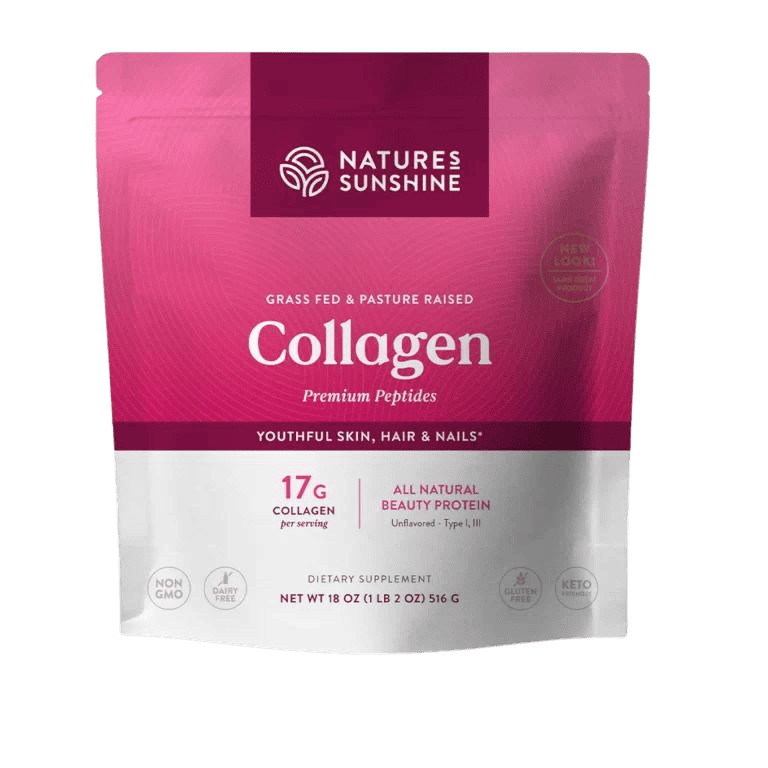
Esta fórmula no contiene OGM, es apta para dietas Keto, no contiene lácteos, no contiene gluten, no contiene soya y es apta para dietas Paleo, lo que la hace accesible para una amplia variedad de preferencias alimentarias. Si tienes dudas sobre si el colágeno es adecuado para tus necesidades específicas, nuestro naturópata ofrece consultas gratuitas para ayudarte a encontrar la mejor opción.
Cómo tomar el colágeno
El colágeno no tiene olor ni sabor, y se mezcla fácilmente en cualquier bebida caliente o fría, batido o alimento. Se integra con facilidad en cualquier programa de bienestar diario. Mezcla 1 cucharada en cualquier bebida (café, té, agua, jugo de fruta, etc.) o agrégalo a tus recetas favoritas. Úsalo a diario para obtener mejores resultados.
Dado que la vitamina C es un cofactor reconocido en la síntesis de colágeno, combinar tu colágeno con una bebida o alimento rico en vitamina C puede complementar sus beneficios. La investigación sugiere que es importante un uso constante y diario durante varias semanas: muchos estudios clínicos que muestran resultados positivos han utilizado duraciones de 8 a 12 semanas o más.
Escrito por Greg Howlett
Preguntas frecuentes
¿El colágeno es una proteína completa?
No. El colágeno presenta una notable deficiencia del aminoácido esencial triptófano, por lo que se considera una proteína incompleta. No debe usarse como única fuente de proteína. Su perfil de aminoácidos es distinto del de proteínas dietéticas completas como el suero de leche o los huevos, con una concentración particular de glicina, prolina e hidroxiprolina que apoya específicamente tejidos estructurales como la piel, el cabello, las uñas y el tejido conectivo.
¿Cuánto tiempo tarda en verse resultados con la suplementación con colágeno?
Los estudios clínicos suelen medir los resultados durante un periodo de 8 a 12 semanas, y algunos muestran mejoras en la elasticidad y la hidratación de la piel dentro de ese plazo. En cuanto a los beneficios articulares, la investigación sugiere que los efectos beneficiosos pueden tardar tres meses o más en manifestarse. Un estudio sobre las uñas midió los resultados durante 24 semanas. Es importante el uso diario constante, ya que la investigación que respalda los beneficios del colágeno se basa en una ingesta regular durante periodos prolongados.
¿Es seguro el colágeno para el uso a largo plazo?
Según la investigación disponible, el uso prolongado de colágeno se considera seguro. Ninguno de los estudios incluidos en una revisión sistemática describió efectos adversos de la suplementación con colágeno, incluso con dosis más altas o en diferentes formas de suplemento. La FDA clasifica el colágeno hidrolizado como «generalmente reconocido como seguro» (GRAS, por sus siglas en inglés). Como siempre, si tienes inquietudes de salud específicas, nuestro naturópata te ofrece una consulta gratuita.
¿Cuál es la diferencia entre el colágeno y los péptidos de colágeno?
El colágeno nativo es un polímero grande y complejo, con baja solubilidad y biodisponibilidad. Los péptidos de colágeno (también llamados colágeno hidrolizado) son colágeno que se ha descompuesto en cadenas de aminoácidos más pequeñas mediante hidrólisis enzimática. Estos péptidos más pequeños —con un peso molecular de entre 3 y 6 kDa, por lo general— se absorben más fácilmente en el cuerpo y pueden llegar a tejidos diana, donde pueden apoyar a las células productoras de colágeno. En realidad, todos los suplementos de colágeno deberían llamarse péptidos de colágeno o colágeno hidrolizado.
¿Puedo mezclar el colágeno en bebidas calientes como el café?
Sí. Este colágeno no tiene olor ni sabor, y se mezcla fácilmente en cualquier bebida caliente o fría. El café, el té, el agua, el jugo de fruta y los batidos funcionan bien. También puedes agregarlo a tus recetas favoritas. Esta versatilidad facilita incorporarlo a tu rutina diaria.
¿Este colágeno es apto para dietas Keto, Paleo o sin lácteos?
Sí. Este colágeno está certificado sin OGM, es apto para dietas Keto, no contiene lácteos, no contiene gluten, no contiene soya y es apto para dietas Paleo, lo que lo hace compatible con una amplia variedad de preferencias y restricciones alimentarias.
Talk to Dr. Shannyn Fowl
Not sure if this is right for you? Book a free, no-pressure consultation for personalized guidance on your health goals.
Book your free consult →About Caring Sunshine
A family-run reseller of premium supplements — free shipping, a 90-day guarantee, and real people who know the products.
Learn more about us →