
Beneficios de la clorofila líquida para las mujeres
Descubre los beneficios de la clorofila líquida para las mujeres: salud de la sangre, apoyo inmunitario, limpieza natural y efecto desodorante.
Beneficios de la clorofila líquida para las mujeres: qué es y por qué es importante
La clorofila es el pigmento verde que se encuentra en las plantas y permite la fotosíntesis: convierte la luz solar en energía. Pero esta extraordinaria molécula hace más que nutrir la vida vegetal. Cuando se consume como suplemento, los derivados de la clorofila se han usado tradicionalmente para apoyar los procesos naturales de limpieza de la sangre, favorecer una respuesta inmunitaria saludable y actuar como desodorante natural.
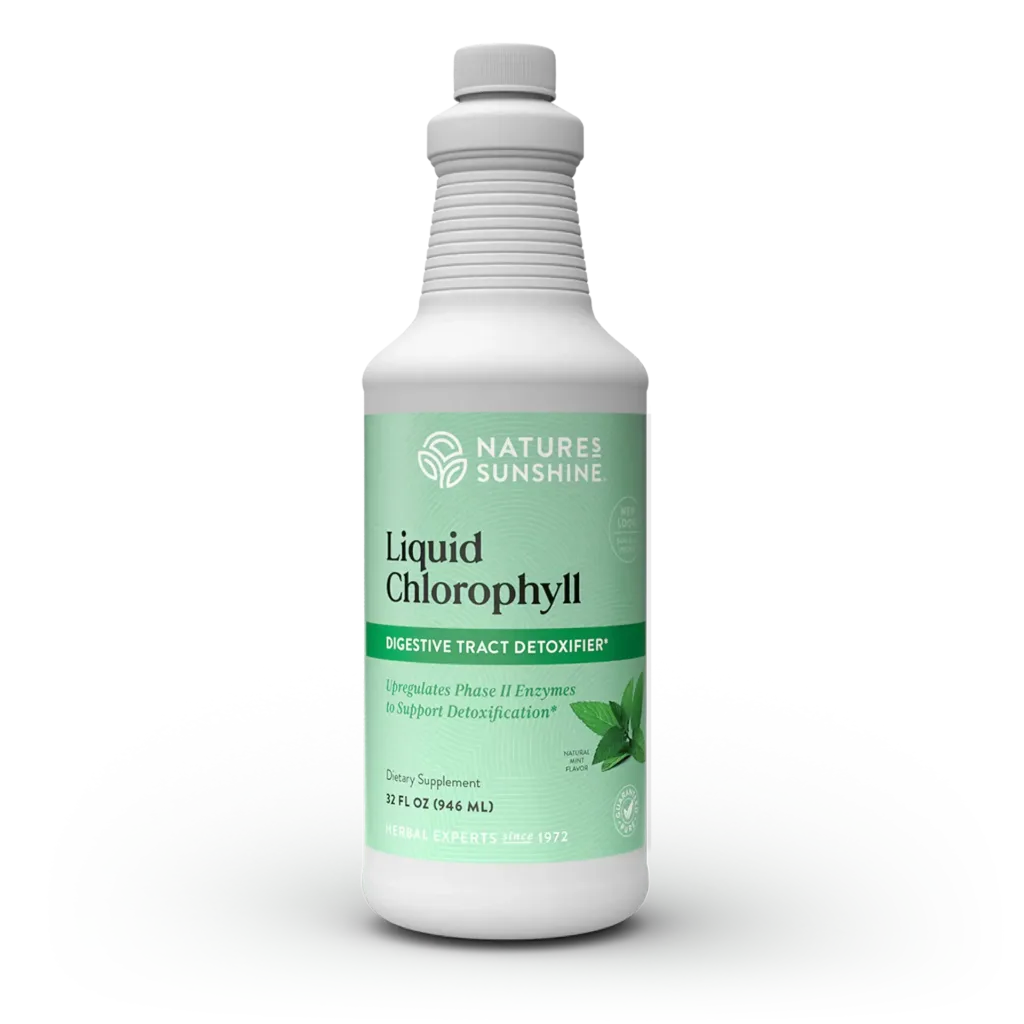
La mayoría de los suplementos de clorofila líquida —incluido el Liquid Chlorophyll de Nature's Sunshine— usan clorofilina de cobre y sodio, un derivado semisintético y soluble en agua de la clorofila. En la clorofila natural, el anillo de porfirina contiene un átomo central de magnesio y una cola de fitol que la hace soluble en grasa. En la clorofilina, el magnesio se sustituye por cobre y se elimina la cola de fitol, lo que crea una forma estable y soluble en agua que se mezcla fácilmente en un vaso de agua fría.
Para las mujeres que buscan una adición diaria sencilla que apoye el bienestar de todo el cuerpo, los beneficios de la clorofila líquida para las mujeres se concentran en varias áreas interrelacionadas: la salud de la sangre, el apoyo a la desintoxicación, la función inmunitaria y la frescura interna. Veamos qué nos dicen realmente la investigación y el uso tradicional.
Apoyo a la salud de la sangre y la limpieza natural
Una de las conexiones tradicionales más convincentes entre la clorofila y la salud de las mujeres es su similitud estructural con la hemoglobina. Tanto la clorofila como la hemoglobina comparten una estructura de anillo tetrapirrólico: la clorofila con magnesio en el centro, la hemoglobina con hierro. Esta semejanza ha llevado históricamente a los terapeutas tradicionales a usar preparados ricos en clorofila para apoyar la producción de glóbulos rojos.
La investigación sobre una formulación de clorofilina de hierro y sodio (tabletas Shengxuening) ha mostrado evidencia clínica más directa: un ensayo clínico de fase IV, multicéntrico y controlado aleatorizado realizado en 31 hospitales observó aumentos significativos de hemoglobina en adultos y niños, con una tasa de eficacia global de un 84.8%. Un metaanálisis de 2022 que incluyó 39 ensayos respalda aún más la eficacia de esta formulación para la anemia por deficiencia de hierro. Sin embargo, es importante señalar que la clorofila estándar de origen vegetal —que contiene magnesio en lugar de hierro— no cuenta con evidencia clínica sólida en humanos que respalde un aumento directo de los niveles de hemoglobina. La conexión sigue siendo reconocida tradicionalmente, pero no está clínicamente comprobada para los suplementos de clorofila a base de magnesio.
La clorofila también se ha usado tradicionalmente como limpiador y desintoxicante interno durante décadas. Este uso tradicional se respalda en la capacidad documentada de la clorofila para unirse a ciertos carcinógenos y reducir su biodisponibilidad sistémica, además de apoyar los sistemas enzimáticos de desintoxicación hepática. Un ensayo histórico, aleatorizado, doble ciego y controlado con placebo en 180 adultos observó que 100 mg de clorofilina tomados 3 veces al día durante cuatro meses produjeron una reducción de un 55% en los biomarcadores urinarios de aductos de aflatoxina-ADN en comparación con el placebo: esto demuestra que la clorofilina puede reducir de forma significativa la carga corporal de al menos una clase de toxina ambiental.
Si bien esta evidencia clínica es específica a la unión con aflatoxinas, el concepto más amplio de una "limpieza de todo el cuerpo" mediante la clorofila tiene su origen en el uso tradicional y en la práctica naturopática. Si tienes curiosidad por saber cómo un protocolo de limpieza podría adaptarse a tus objetivos personales de bienestar, nuestro naturópata te ofrece una consulta gratuita.
Apoyo inmunitario y propiedades desodorantes naturales
A la clorofilina se le han atribuido tradicionalmente propiedades de apoyo inmunitario con base en evidencia preclínica que muestra efectos inmunoestimulantes, un posible aumento de la producción de glóbulos blancos y una modulación antiinflamatoria. Los marcos tradicionales y naturopáticos consideran la clorofila un tónico inmunitario, aunque todavía no se dispone de evidencia clínica directa en humanos sobre resultados específicos relacionados con la inmunidad, como la resistencia a infecciones o el recuento de células inmunitarias.
Esta fórmula también contiene aceite de partes aéreas de hierbabuena (Mentha spicata), cuyo ácido rosmarínico y flavonoides han mostrado en estudios preclínicos que modulan la función inmunitaria mediante mecanismos antioxidantes, antiinflamatorios, antibacterianos e inmunosupresores. El ácido rosmarínico ha demostrado específicamente actividad inmunosupresora al inducir la apoptosis de linfocitos T activados de pacientes con artritis reumatoide en investigaciones de laboratorio.
Un beneficio que las mujeres suelen apreciar es el papel tradicional de la clorofila como desodorante interno natural. La clorofila se ha comercializado como desodorante interno desde la década de 1950. Un estudio de 1980 observó que la administración de clorofilina ayudó a controlar los olores corporales y fecales en 62 pacientes de una residencia geriátrica. En otro estudio, la clorofilina de cobre y sodio oral (60 mg 3 veces al día) durante tres semanas disminuyó de forma significativa la trimetilamina urinaria en pacientes con trimetilaminuria, un trastorno metabólico específico.
Cabe señalar que la evidencia sobre los efectos desodorantes en personas sanas proviene principalmente de estudios antiguos y de tamaño reducido. Aun así, la clorofilina se ha usado por vía oral como desodorante interno durante más de 50 años sin que se hayan descrito efectos secundarios graves.
¿Quién se beneficia más de la clorofila líquida?
Los beneficios de la clorofila líquida para las mujeres abarcan varios objetivos de bienestar. Las mujeres interesadas en apoyar los procesos naturales de limpieza de la sangre de su cuerpo pueden encontrar en este producto una adición diaria sencilla a su rutina. Quienes buscan un apoyo inmunitario suave basado en el uso tradicional también pueden valorar su lugar dentro de un plan de bienestar más amplio.
Las mujeres preocupadas por la frescura interna —ya sea relacionada con el olor corporal o con el bienestar digestivo— históricamente han recurrido a la clorofila como una opción natural. Y quienes buscan una forma suave y de sabor agradable para aumentar su ingesta diaria de agua pueden disfrutar de que esta fórmula líquida convierte un simple vaso de agua en una bebida verde refrescante con un toque de hierbabuena.
Debido a que los suplementos de clorofila y clorofilina no se han evaluado en cuanto a su seguridad en mujeres embarazadas o en periodo de lactancia, deben evitarse durante el embarazo y la lactancia. Además, las personas con trastornos raros del metabolismo del cobre, como la enfermedad de Wilson, deben limitar la exposición a aditivos de cobre, incluida la clorofilina de cobre y sodio. Si tomas metotrexato u otros medicamentos, habla con un profesional de la salud, ya que un informe de caso ha sugerido una posible interacción farmacocinética. Nuestro naturópata siempre te ofrece una consulta gratuita si tienes dudas sobre si este suplemento es adecuado para ti.
Cómo tomar la clorofila líquida
Toma 2 cucharadas (30 mL) al día en un vaso de 8 oz líq. de agua fría. Refrigera después de abrir.
Ten en cuenta que, al tomarse por vía oral, la clorofilina puede causar una coloración verde en la orina o las heces, o una coloración amarilla o negra en la lengua. También se han descrito casos ocasionales de diarrea. La clorofilina oral puede producir resultados falsos positivos en las pruebas de guayaco para detectar sangre oculta: menciónalo a tu profesional de la salud si tienes programada alguna prueba de este tipo.
Ingredientes clave
- ✓ Envío gratis en pedidos superiores a $75
- ✓ Devoluciones fáciles en 90 días
- ✓ Envíos en pocas horas
Escrito por Greg Howlett
Preguntas frecuentes
¿Cuáles son los principales beneficios de la clorofila líquida para las mujeres?
La clorofila líquida —específicamente la clorofilina de cobre y sodio— apoya los procesos naturales de limpieza de la sangre, favorece una respuesta inmunitaria adecuada, fortalece el cuerpo a nivel celular y molecular, y actúa como desodorante natural. Su similitud estructural con la hemoglobina la ha vinculado tradicionalmente con el apoyo a la salud de la sangre, y la investigación sugiere que puede unirse a ciertas toxinas ambientales en el tracto digestivo, reduciendo su absorción. La clorofilina también se ha usado tradicionalmente como tónico inmunitario, aunque todavía no se dispone de evidencia clínica directa en humanos sobre resultados específicos relacionados con la inmunidad.
¿Es la clorofila líquida lo mismo que la clorofila natural de las plantas?
No. La mayoría de los suplementos de clorofila líquida, incluido este, contienen clorofilina de cobre y sodio: un derivado semisintético y soluble en agua. La clorofila natural de las plantas es soluble en grasa y no se disuelve bien en agua. En la clorofilina, el átomo central de magnesio se sustituye por cobre y se elimina la cola de fitol, lo que la hace estable y fácil de mezclar en agua. Las clorofilas naturales son abundantes en verduras de hoja verde como la espinaca, la col rizada y la lechuga.
¿Puede la clorofila líquida ayudar con el olor corporal?
La clorofilina se ha usado como desodorante interno durante más de 50 años. Un estudio de 1980 observó que ayudaba a controlar los olores corporales y fecales en 62 pacientes de residencias geriátricas, y un estudio pequeño mostró que la clorofilina oral disminuyó de forma significativa la trimetilamina urinaria en pacientes con trimetilaminuria. Sin embargo, la evidencia en personas sanas por lo demás proviene principalmente de estudios antiguos y de tamaño reducido. Se ha usado sin efectos secundarios graves en este uso durante décadas.
¿Es segura la clorofila líquida? ¿Tiene algún efecto secundario?
No se conoce que las clorofilas naturales sean tóxicas, y no se le han atribuido efectos tóxicos a la clorofilina a pesar de más de 50 años de uso clínico. Los efectos secundarios comunes e inofensivos incluyen coloración verde de la orina o las heces, coloración amarilla o negra de la lengua y diarrea ocasional. La clorofilina debe evitarse durante el embarazo y la lactancia, ya que su seguridad no se ha evaluado en estos grupos. Las personas con enfermedad de Wilson u otros trastornos raros del metabolismo del cobre deben evitarla debido a su contenido de cobre. También puede producir resultados falsos positivos en las pruebas de guayaco para detectar sangre oculta.
¿La clorofila realmente ayuda con la desintoxicación?
La investigación respalda la capacidad de la clorofilina para unirse a toxinas ambientales específicas. Un ensayo aleatorizado y controlado con placebo observó que la clorofilina (100 mg 3 veces al día) redujo en un 55% los biomarcadores urinarios de aductos de aflatoxina-ADN en una población con alta exposición. Un estudio farmacocinético cruzado confirmó que una sola dosis de 150 mg de clorofilina o clorofila podía disminuir la absorción de aflatoxina B1. El concepto más amplio de una limpieza de todo el cuerpo mediante la clorofila tiene su origen en el uso tradicional más que en evidencia clínica controlada, pero el mecanismo de unión a toxinas está documentado científicamente.
¿Por qué la clorofila líquida contiene aceite de hierbabuena?
El aceite de partes aéreas de hierbabuena aporta el sabor suave y ligeramente dulce a menta que hace que la clorofila líquida sea agradable de beber. Además del sabor, la hierbabuena contiene ácido rosmarínico y flavonoides que han mostrado actividad antiinflamatoria y antioxidante en investigaciones preclínicas, y su ácido rosmarínico ha demostrado propiedades inmunomoduladoras en estudios de laboratorio. La hierbabuena se ha valorado tradicionalmente en distintas culturas por su aporte al bienestar digestivo y por refrescar el aliento.
Talk to Dr. Shannyn Fowl
Not sure if this is right for you? Book a free, no-pressure consultation for personalized guidance on your health goals.
Book your free consult →About Caring Sunshine
A family-run reseller of premium supplements — free shipping, a 90-day guarantee, and real people who know the products.
Learn more about us →